MAY 13, 2026
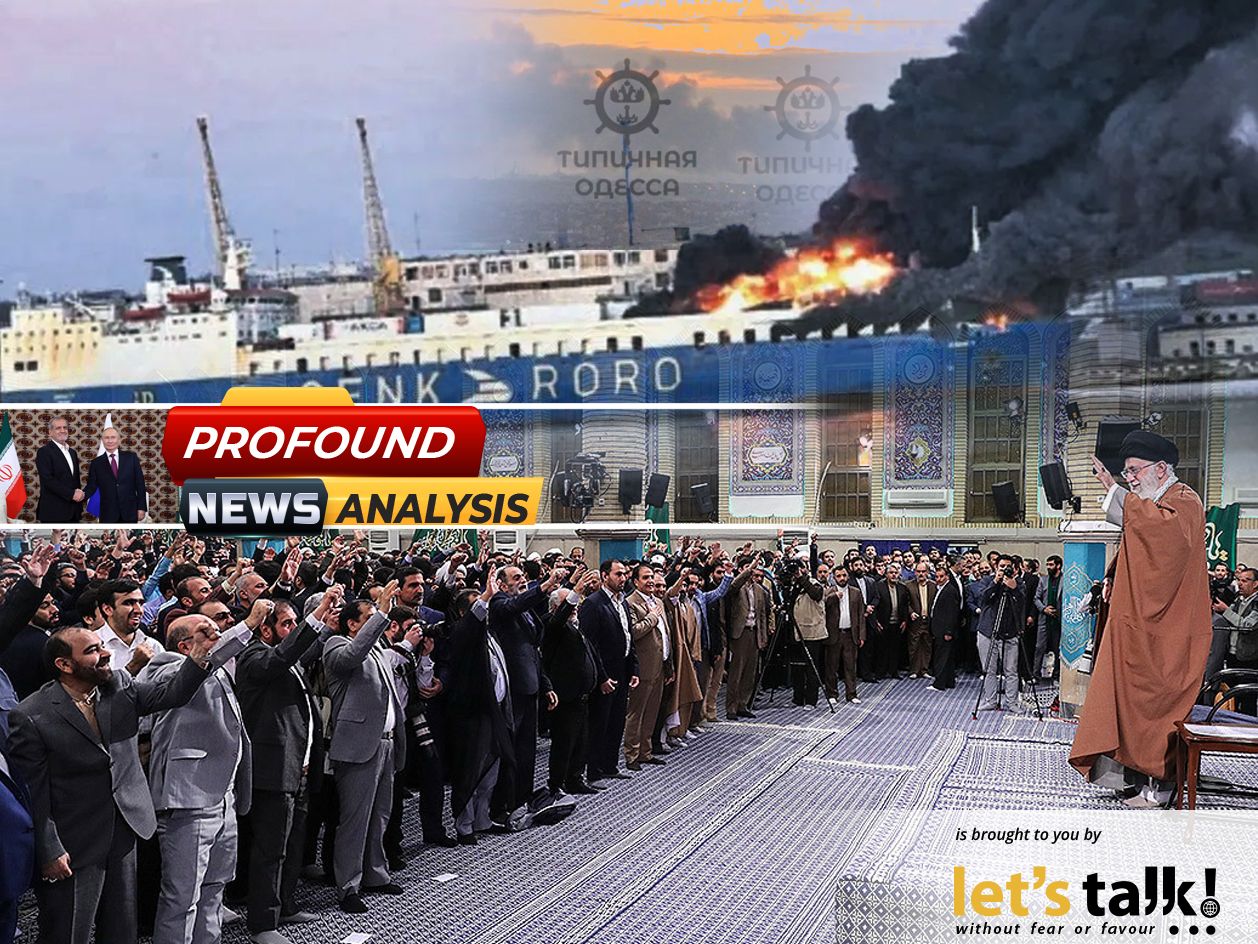
IRAN TO ‘GO NUCLEAR’ ON ECONOMIC WARFARE

What The Massive Underwater Fibre Optic Cables Look Like
Iran has said it will have some surprises for the US if president Donald Trump attacks the country in order to begin the US/Israel-Iran War 3.0.
For the record, the US/Israel-Iran War 1.0 aka the six-day war occurred in June last year, while the recently concluded US/Israel-Iran War 2.0 began on Feb 28 this year.
Some analysts are speculating that the surprise could be the unveiling of a brand new powerful missile that Iran has never used in the two previous wars.
While this could be true, notice that Iran uses the word surprises in the plural. So this could mean Iran has more than one surprises for the US should it even think of firing the first salvo as in the previous two wars.
One surprise that is not much talked about by the global mainstream media and even the global ALTERNATIVE media is the threat by Iran to cut submarine cables aka undersea internet cables which lie under the Hormuz Strait.
Iran hasn’t cut them yet, but they’re are threatening to and it’s now being discussed as “Plan B” if the war escalates.
It seems no countries in the world are taking this threat seriously just like earlier on during the face-off prior to the US/Israel-Iran War 2.0 when Iran said it will retaliate forcefully by striking US military bases in the Arab Gulf states and closing the Hormuz Strait should the US/Israel fire the first salvo.
Since May 9, Iranian state-linked media like FARS and Tasnim have been pushing new proposals on submarine cables under the Hormuz Strait.
These are:
– Tolls and permits: Foreign companies must pay Iran to run cables through Hormuz, get Iranian licenses, and operate under Iranian law;
– Iran-only maintenance: Cable repairs and maintenance would have to be done by Iranian firms, and;
– Sovereignty claim: Iran says it has jurisdiction running through Hormuz under Article 34 of the UN Convention on the Law of the Sea (UNCLOS).
IRGC-linked outlets have also said Iran could destroy submarine cables if needed. That was first said on April 22, and repeated again May 9.
So right now it’s just threats plus toll demands, not actual cutting of the cables.
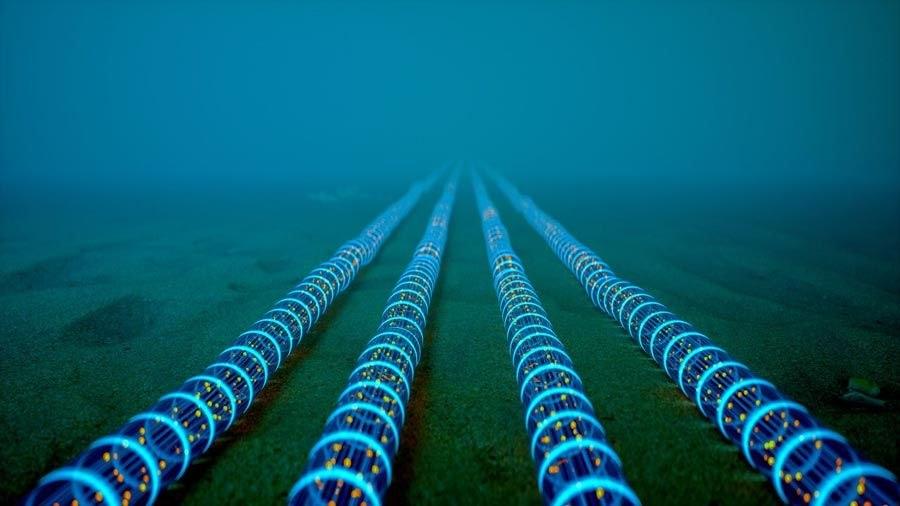
Why Hormuz cables matter that much?
About 99% of global internet traffic runs on undersea cables, not satellites.
Seven major cables pass through Hormuz which, inter alia, include:
– AAE-1 (Asia-Africa-Europe 1): A high speed ‘superhighway’ linking Southeast Asia to Europe;
– FALCON: The primary loop connecting the entire Gulf region;
– TGN-Gulf: The backbone for regional banking and government services;
– SeaMeWe-6: One of the newest, highest capacity systems currently under deployment, and;
– Orient Express and GBI (Gulf Bridge International): Critical links for regional data redundancy.
These cables connect Europe and the Gulf, the Gulf and India/Asia. If they’re cut, you’d see outages immediately in UAE, Saudi Arabia, Qatar, India and Pakistan.
Bear in mind the Gulf states run more than 90% banking/cloud activities on these cables.
Cutting them would hurt the Gulf countries more than Iran, as the latter only runs less than 40% of its traffic through the Hormuz and has overland backups via Turkey.
Can Iran actually do it?
Technically, it’s easy because submarine cables are just fibre on the seabed. In 2022, the Houthis cut three cables off Yemen and the Red Sea traffic dropped 25% for months.
There are only approximately 60 cable repair ships worldwide but they can’t work in war zones.
But geopolitically it’s too risky for Iran to do this because it would be a major escalation and tantamount to an economic warfare against Europe and Asia.
As insurance and repair become impossible in a war zone, the US, UK and France are already moving warships to guard Hormuz for mines and cables.
I don’t think Iran will cut these cables unless Israel/US directly hit Iranian nuclear sites again or Iran decides “to go nuclear” on economic warfare.
Right now Iran’s strategy is tolling and control, not cutting. It’s a way to make monies and get leverage without triggering full war. Just think of it like Iran’s oil toll booth but for data.
In other words, Iran is just threatening and has legal plans ready. Cutting the cables is on the table if the war gets worse.
The impact if Iran does it – internet slowdowns/outages in the Gulf and India, delays in financial transaction but global internet wouldn’t collapse thanks to other routes.
Starlink and AST SpaceMobile are being pitched as emergency backups since they don’t rely on Hormuz cables.

🇮🇷👀 Iran just dropped a detailed map of the undersea internet cables slicing through the Strait of Hormuz and called them what they are: highly vulnerable.
Tasnim News laid it out plain: at least seven major submarine cables run right through that narrow chokepoint. Over 97 percent of global internet traffic for e-commerce, cloud services, banking, and communications passes through them. The report zeroes in on how the southern Gulf states of UAE, Qatar, Bahrain, Kuwait, Saudi Arabia depend far more heavily on these routes than Iran ever has. Their cloud hubs and data centers sit exposed on the opposite side of the same waters.
The Strait isn’t just an oil artery but the digital backbone of the entire region. Damage a few cables — accident or otherwise and you don’t just slow down tankers but digitally black out entire economies in hours. This is the same playbook we’ve already seen in the Red Sea.
While Trump keeps wishcasts that Iran is “collapsing” and desperate for cash, Tehran is publishing the map that shows exactly where the next pain point lies. The empire that thought it could dictate terms from afar is learning, once again, that the owners of the Gulf decide who sails, who trades, and now, potentially who stays connected.
Why Iran is ‘going nuclear’ on economic warfare?
Iran has been under US and European sanctions for a record of 47 years, had its assets frozen for 47 years, being isolated internationally by the US and Europe for 47 years, and subject to US bullying via regime change operations by the US and Europe for 47 years.
In recent times, this US bullying took the form of being attacked by the US and Israel twice while in the midst of nuclear deals negotiations.
And no US presidents had ever taken a direct and personal roles in this bullying with the exception of Donald Trump.
All these bullying taken with the utmost motive of regime change have taken an enormous toll on Iran in several concrete ways – economically, socially, and in health. It’s not a simple story though, because Iran has adapted too.
The biggest hit is on oil revenue which was cut hard, as oil constitutes about 70% of Iran’s export earnings.
US sanctions target oil sales by blocking tankers, insurance, and payments with the result Iran’s oil exports fell from 2.8 million barrels/day pre-2018 to 500,000 to one million during the toughest periods.
Between 2018-2021 sanctions caused healthcare costs to rise 125% and food prices 186%.
The currency collapsed repeatedly. Before the Feb 2026 war, the rial was already “squeezed” and helped trigger protests.
The war, sanctions and internet shutdown have caused an estimated one million direct job losses and two million unemployment.
Sanctions also block foreign direct investment. Analysts say Iran would need hundreds of billions to rebuild its nuclear/missile/naval infrastructure, but investors won’t touch it while sanctions exist.
Domestic industry struggles with parts and tech.
Even though medicine is officially “exempt” from sanctions, it’s been one of the hardest hit areas. Banks and foreign companies are scared of US penalties, so payments for medicine get blocked. Iran can’t easily pay even when funds exist.
WHO and other studies estimate six million Iranians with complex diseases like cancer, hemophilia, MS, thalassemia and have faced shortages of life-saving drugs.
While cancer patients missing radiotherapy, operating theatres running out of modern anesthetics, and drug prices up more than 50%.
Out-of-pocket healthcare costs rose while household incomes fell, hitting the poor hardest.
Inflation from sanctions made food and healthcare less affordable across all income groups.
The US argues humanitarian exemptions exist, but in practice banks avoid transactions and companies self-sanction due to fear of fines.
The rial’s collapse means Iranians can buy far less than 10 years ago.
Economic pain from sanctions and mismanagement sparked nationwide protests in Dec 2022 and before the 2026 war, all instigated by the US and Europe with the aim of regime change but these riots failed to achieve regime change or made Iran a failed state.

Resilience and adaptation
This resilience and adaption comes from the fact that Iran is considered one of the world’s oldest continuous civilizations, with a history spanning over 50 centuries (more than 5,000 years).
Evidence of urban settlements in Iran dates back to 4000 Before Common Era (BCE).
This was followed by the establishment of the Elamite Kingdom (circa 3000 BCE – 600 BCE) – a major power that existed for nearly 2,000 years.
The Medes unified Iran as a nation in 625 BCE, followed by the Achaemenid Empire founded by Cyrus the Great in 550 BCE.
Iran has maintained a strong cultural identity and political presence for thousands of years despite various foreign invasions.
In the last 47 years of US’ bullying, Iran has built a ‘resistance economy’ – more domestic production, trade with China, Russia and UAE via shadow banking.
Iran was the first to introduce shadow fleet built over the years of US sanction on its oil exports which the Russians learnt from Iran when Russian oil was sanctioned in the wake of the Ukraine war.
Iranian society also adapted – with some people downsized lifestyles, turned to art, nature and music, and found non-Western trade partners.
Analysts say sanctions weakened the middle class but increased dependency on the state, which paradoxically strengthened the regime’s control.
Iran’s government calls sanctions “economic terrorism”. The US says they target the nuclear program, not civilians.
In reality sanctions are “smart” on paper but hit ordinary people through banking/finance channels.
The UN and rights groups have repeatedly said sanctions hurt vulnerable populations more than elites.
In fact, Russia and China have all along said that unilateral sanctions are illegal under the UN Charter unless they are done under the auspices of the UN.
In the case of Iran, in addition to sanctions, the 2026 war with the US and Israel has made the situation worse.
Analysts expect Iran’s economy to shrink another 10% because of the massive damages and military blockade of Iran, the cost of which is borne by ordinary Iranians in the form of higher prices, fewer medicines, and fewer opportunities.
After suffering for 47 years under American bullying, with no assistance from other countries with the exception of China and Russia, Iran seems to have developed a mindset of enough is enough.
Hence it has decided that in the 2026 war, if Iran cannot peacefully sell its oil or trade in peace with other nations, other countries too will not be able to peacefully buy or sell their oils and trade peacefully with other nations.
Hence, the decision to retaliate against the US/Israel’s first strike in the 2026 war by closing the Strait of Hormuz which has made the whole world suffer.
But in a way Iran actually is not closing the Hormuz Strait. With the exception of all warships which are forbidden to enter the Strait, and ships from the US and Israel, all other ships are allowed to pass the Strait if they coordinate their movement with Iran for their safe navigation and pay a toll to Iran in Iranian rials for these services.
As for imposing fees on the subsea internet cables, Iran got the inspiration to do this from Egypt.
The monetisation blueprint is modelled loosely on Egypt which earns US$250 million to US$400 million annually from cables transiting the Suez corridor.
Under the proposed framework, foreign operators would pay per-metre infrastructure fees and licensing royalties to route cables through Iranian territorial waters.
This would enable the undersea cables to move the bulk of internet traffic, financial transactions and cloud data flowing between Europe and Asia via the Middle East.
So in effect, Iran has no intention to cut the cables. It just want to make justifiable profit from the internet business passing through its territory so that it can use the monies to finance the reconstruction of the country that has been massively destroyed by the US and Israel in unjust wars.
The world has changed tremendously since the onset of the US/Israel-Iran War 2.0 and it is better for the whole world to just allow Iran to do all these in exchange for their elegant silence all these 47 years of injustices that had led to the 2026 war.
Better still, if the whole world could just pressure the US to accept Iran’s conditions for ending the war, for otherwise Iran will just go ahead with “going nuclear” on economic warfare.
Just saying …


🇮🇷 After 69 nights, Iranians are still united and stand together for Iran.
Recent posts
- Vol 4 No 52: Israel and its four fairy tales on Hamas [PDF]
- Vol 4 No 53: Unprecedented Iran’s slap on Israel’s face that has many firsts [PDF]
- Vol 4 No 54: The world in chaos [PDF]
- Vol 4 N0 55: Panic and despondency before the storm [PDF}
- Vol 4 No 56: The Iranian Art of War is driving Israel on the edge of an economic and military abyss [PDF]
- Vol 4 No 57: A watershed Brics Summit in Kazan, Tatarstan [PDF]
- Round-up of world news (July 29)
- Round-up of world news (August 12)
- Round-up of world news (August 26)
- Round-up of world news (September 2)
- Round-up of world news (October 17)
- Breaking News (23/10)
- Breaking News (24/10)
- Round-up of world news (October 29)
- Breaking News (31/10)
- Round-up of world news (November 4)
- Round-up of world news (November 12)
- The Gaza Ceasefire: Beyond the Headlines
- Eschatology + Seerah: Understanding the Gaza War through the lens of Isra’ Mi’raj
- TWO EVENTS THAT MAY TURN OUT TO BE UNEVENTFUL
- Sighting crescent moon with naked eye a religious obligation
- TWO EVENTS THAT MAY TURN OUT TO BE MUCH MORE EVENTFUL – PART 1
- TWO EVENTS THAT MAY TURN OUT TO BE MUCH MORE EVENTFUL – PART 2
- WHAT’S THE BEEF ABOUT TRUMP’S TARIFFS
- ANALYSING “BRICS BY BRICS”, BRICS’ WEAKEST LINKS
- THE EMPIRE HAS FALLEN AND IT’S TIME TO MANAGE IT TO AVOID WW3