MAY 22, 2025
ANALYSING “BRICS BY BRICS”, BRICS’ WEAKEST LINKS
“BRICS BY BRICS”, BRICS IS CHALLENGING US FINANCIAL DOMINANCE
The US has maintained its deficit-driven empire through dollar hegemony, military coercion, and financial warfare without any challenge until the BRICS organisation appears on the scene to mount what could be the most serious challenge yet.
But before we go into this, let’s have a quick dive on BRICS.
BRICS is an acronym for an association of five major emerging economies: Brazil, Russia, India, China, and South Africa. Originally formed as BRIC (without South Africa) in 2006, the group expanded in 2010 when South Africa joined.
In 2023, BRICS invited six countries (Egypt, Ethiopia, Iran, Saudi Arabia, UAE and Argentina) as new members. However, Argentina later declined membership.
A Saudi Arabian government minister said in mid-January 2024 it had not joined BRICS. But South Africa’s government (BRICS chair for 2023) has since confirmed its membership status. Moreover, the Saudis have taken part in all BRICS activities since then.
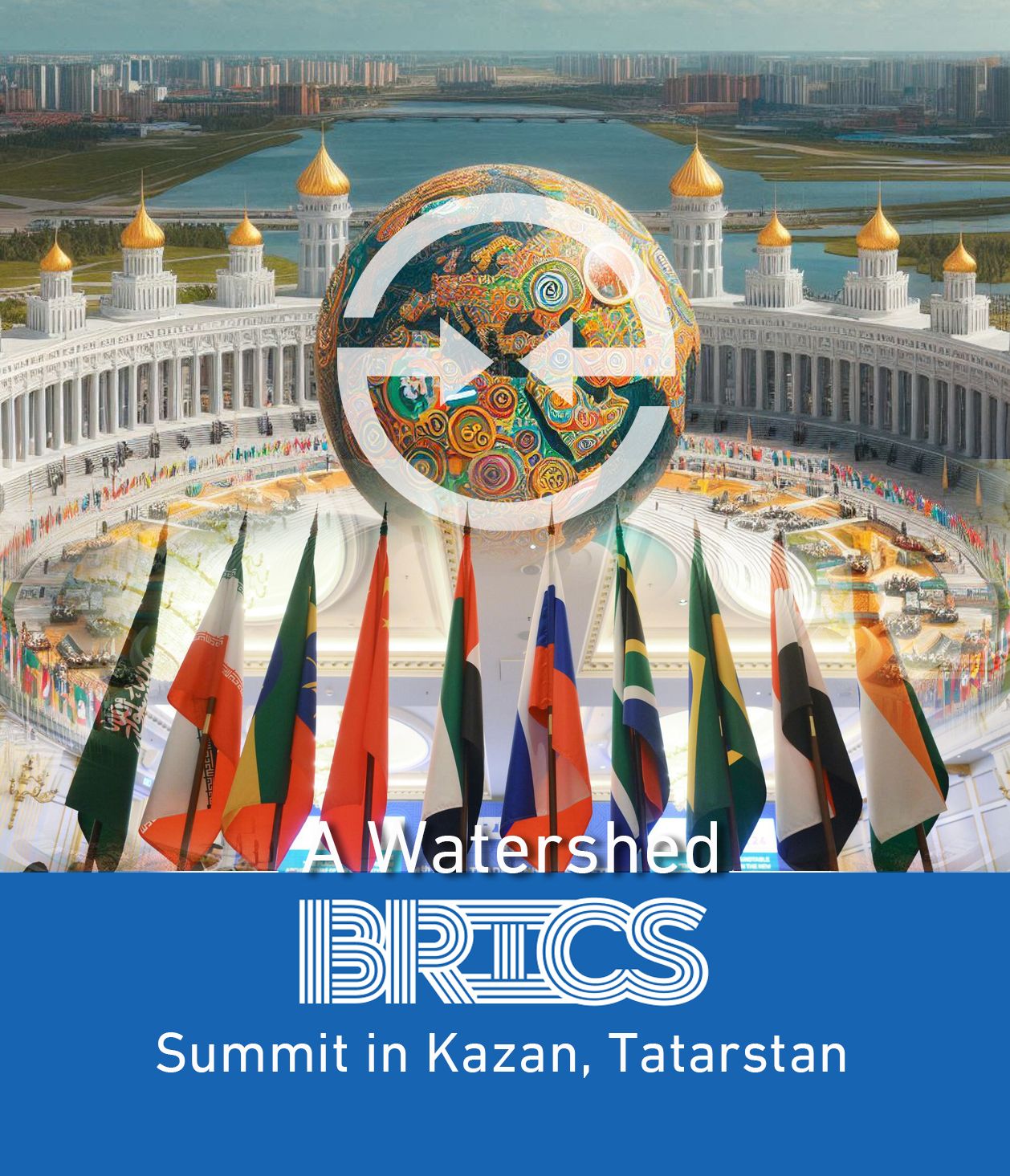
In 2024, with Russia hosting the BRICS Summit in Kazan, BRICS officially added 13 new countries to the union as partner countries (not full members yet).
Four of these were from Asean – Malaysia, Indonesia, Thailand and Vietnam. African countries and the Caucasus came in next, with Algeria, Nigeria and Uganda as partner countries from Africa, while Belarus, Uzbekistan and Kazakhstan hailing from the Caucasus (Central Asia).
Bolivia and Cuba were two South American (Latin America) partner countries while the biggest surprise was Türkiye coming from the North Atlantic alliance, Nato.
Russia’s President Vladimir Putin has said the newly expanded BRICS group showed that a “multipolar world” is being created in a challenge to the US-dominated global order.
BRICS “meets the aspirations of the main part of the international community, the so-called world majority,” Putin said at the formal opening of the leaders’ summit in Russia’s Kazan.
It’s “especially in demand in the current conditions, when truly dramatic changes are taking place in the world, and the process of forming a multipolar world is underway.”
“It would be wrong to ignore the unprecedented interest of the countries of the Global South and East in strengthening contacts with BRICS,” Putin told his fellow leaders. At the same time, it is necessary to maintain a balance.”
This balance takes the form of creating a special category of membership called partner countries, as a first step to become a full- fledged member.
It shows how careful and meticulous Putin and leaders of the original BRICS five member countries are in preventing an enlargement that is hardly compatible with full-fledged institutionalisation because it would be too complicated.
Putin has said many times in 2023 that the new global engine of economic growth and development are in Africa and the Caucasus.
In 2024 he talked about an emerging multipolar models of development that are triggering a new wave of global growth for the entirety of the 21st century.
This global economic growth in the 21st century will be concentrated in BRICS countries and in those states that want to join BRICS, NOT in Europe or North America which are gradually losing their positions in the global economy.
The leaders in terms of economic growth rates, he stressed, will be the states of the so-called Global South, where the GDP per capita is still low, the urbanisation rate is quite low and the birth rate is high. These are primarily the countries of South and Southeast Asia, as well as Africa.
He matched words with deeds when the biggest group to be accepted as partner countries all came from Southeast Asia (31% of partner countries) followed by Africa and the Caucasus and finally the South Americans.
Putin emphatically rejected the notion of a single BRICS currency as the reserve currency of the world, since the time for it has not come yet. He also drew attention to the initial difficult experience of the European in creating a single currency, the Euro, where due to the imbalance in the economies of member countries, economic crises like Brexit and Grexit occurred.
This is precisely what he meant when he said “it is necessary to maintain a balance” in the expansion of BRICS’ membership, and hence, a partner countries membership is created.
This year (2025), Brazil as the chair has announced that Indonesia which was a partner country has become a BRICS member country.
So what this means is BRICS now has 11 full-fledged members (Brazil, Russia, India, China, South Africa, Egypt, Ethiopia, Iran, UAE, Saudi Arabia and Indonesia) and 12 partner countries (Malaysia, Thailand, Vietnam, Algeria, Nigeria, Uganda, Belarus, Uzbekistan, Kazakhstan, Bolivia, Cuba and Türkiye).
And here’s the kicker – BRICS (just the 11 full-fledged members alone) represents about 42% of the world’s population and over 26% of global GDP in terms of Purchasing Power Parity (PPP), beating the G7 – a club of super wealthy countries (US, UK, France, Germany, Belgium, Italy and Japan).

Its genesis, however, wasn’t in a confrontational mode to the West as it happened “coincidentally” when the foreign ministers of the initial four BRIC countries met in New York City in September 2006 at the margins of the General Debate of the UN Assembly.
It was only three years later on June 16, 2009 that a full-scale diplomatic meeting was held in Yekaterinburg, Russia, which led to the official establishment of BRIC. On the same day too, the grouping’s first formal summit was held.
The summit’s focus then was on improving the global economic situation which was then reeling under the Great Recession caused by the US mortgage crisis in 2008, reforming financial institutions, how the four countries could better co-operate in the future, and the various ways that developing countries could become more involved in global affairs.
In the aftermath of the 2009 Yekaterinburg summit, the BRIC nations announced the need for a new global reserve currency, which would have to be “diverse, stable and predictable”.
Although the statement that was released then did not directly criticise the perceived “dominance” of the US dollar – something that Russia had criticised in the past – it did spark a fall in the value of the dollar against other major currencies.
BRICS also promotes alternatives to Western-dominated financial systems like the New Development Bank (NDB) aka the BRICS Bank, established in 2014 to fund infrastructure projects in developing nations.
Geopolitically BRICS serves as a platform for NON-WESTERN-aligned nations, as opposed to ANTI-WESTERN-aligned nations, to increase their collective voice in global governance in the UN, IMF, and WTO among others.
It advocates for a multipolar world order, reducing reliance on the USD, and reforming institutions like the IMF and World Bank. Discussions about a potential BRICS common currency have emerged, though no concrete plans exist yet. The grouping is seen as a counterbalance to the G7, with China dominating economically.
The group is positioning itself as a leader of the “Global South”, offering an alternative to Western-led economic and political structures. If it successfully expands and deepens cooperation in currency, trade or security, it could reshape global geopolitics.
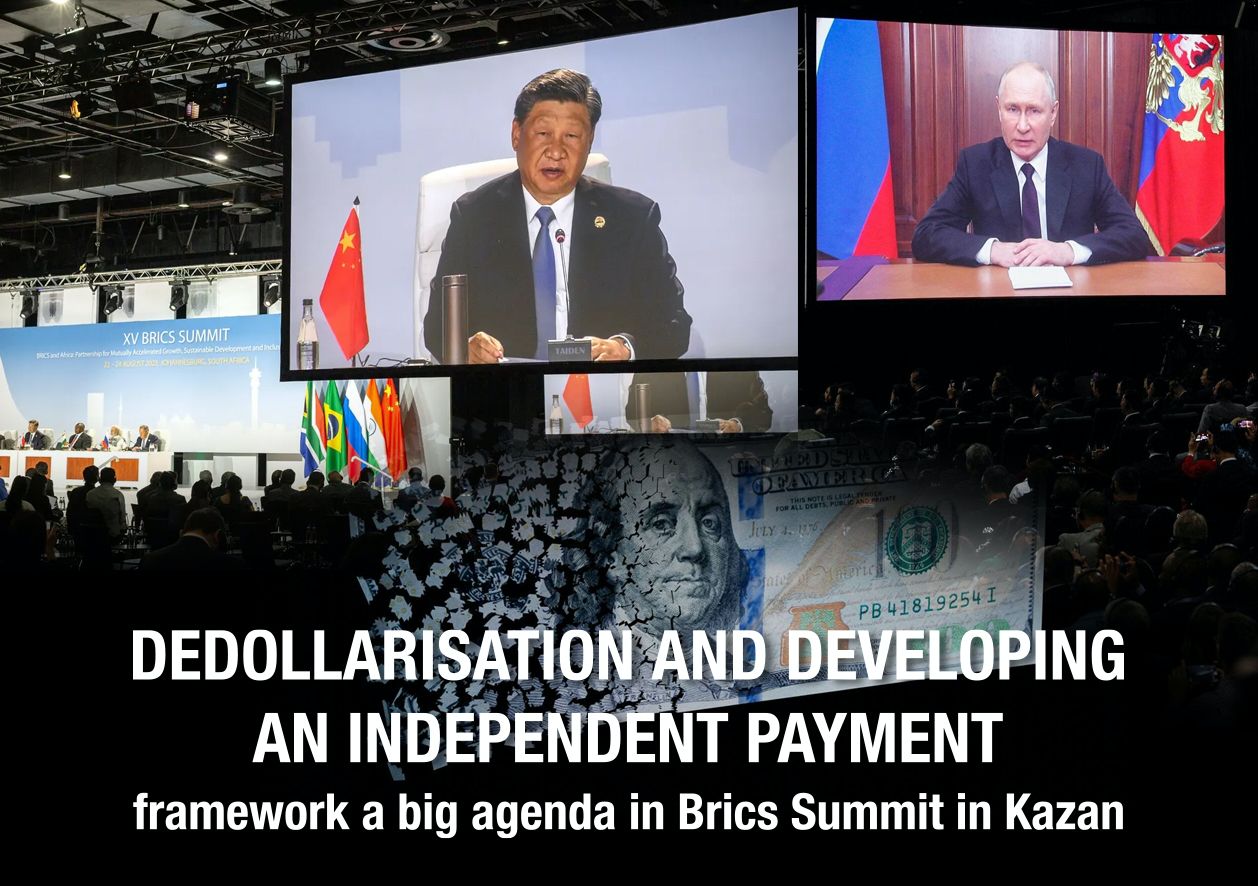
One serious challenge to US financial dominance posed by BRICS is the move towards dedollarisation which simply means reducing reliance on the USD as a reserve currency of the world.
But because dedollarisation also means breaking the petrodollar system whereby it is a MUST for oil trading to be done in USD, this tantamount to a weakening of the US Empire, as oil is the backbone of the demand for dollar, so if BRICS shifts to local currencies, the US loses its biggest leverage.
In the past when any country switched oil sales to other currencies such as when Saddam Hussein switched them to euros in 2000, the US’ response was to invade Iraq (2003) and forced a return to dollars, killing Saddam in the process. Now, BRICS is just too big to invade.
Now you get the picture why the collective West engineered a proxy war with Russia since 2014 because the country is at the forefront of spearheading the dedollarisation move.
It’s like the US and its western allies are saying if it (Russia) is too big (literally) to invade, let’s not invade it directly, hence the proxy war using Ukraine as the battering ram.
But even before 2014 when Russia got serious with dedollarisation in response to the sanctions imposed by the US and EU brought about by Ukraine War 1.0, China has already begun its dedollarisation move.
Since 2011, China began to gradually shift from trade in USD to the Yuan in a STRATEGIC move to promote the internationalisation of the RMB (Renminbi) and reduce reliance on the US dollar-dominated financial system due to:
Global financial crisis (2008) exposed USD risks
The 2008 financial crisis revealed vulnerabilities in the US-dominated financial system, including dollar liquidity shocks and sanctions risks, so China sought to diversify its trade settlements to mitigate potential impacts of US monetary policy and financial instability.
Elevate the Yuan’s status as a global reserve currency
China aimed to elevate the Yuan’s status as a global reserve currency, thus reducing dependence on the USD. In 2009, pilot programs for cross-border RMB trade settlement were launched, expanding significantly by 2011. The People’s Bank of China (PBOC) signed currency swap agreements with multiple countries to facilitate Yuan trade.
Geopolitical and economic sovereignty concerns
The US frequently used the dollar’s dominance for sanctions (e.g. Iran, Russia), prompting China to seek dedollarisation to protect its trade. By promoting the Yuan, China aimed to strengthen financial independence and reduce exposure to US policies.
Trade and investment expansion
As China became the world’s largest trading nation, it pushed for Yuan-denominated contracts to avoid exchange rate risks. The Belt and Road Initiative (BRI, 2013) later accelerated this shift, encouraging partner countries to use RMB in trade and financing.
Offshore RMB market development (Hong Kong and beyond)
China established offshore Yuan hubs (e.g. Hong Kong, London) to facilitate global RMB usage. In 2016, the IMF included the Yuan in the SDR basket, further legitimising it as a reserve currency.
On March 2018, China started buying oil in gold-backed yuan. This is followed on March 2022, when multiple reports claimed that Saudi Arabia was in talks with China about trading Saudi oil and gas to China in Yuan instead of the USD.
While the USD remains dominant, China’s efforts since 2011 have increased RMB usage in trade, reserves, and financial transactions, aligning with its long-term goal of reducing dollar hegemony risks.
The move towards dedollarisation gained speed and momentum in 2022 when in response to Ukraine War 2.0, the US and EU launched so many kamikaze sanctions on Russia.
But Russia managed to down so many of these kamikaze sanctions with the debris falling on the EU and US, causing the two to suffer from deindustrialisation which affects their economy so badly especially Germany.
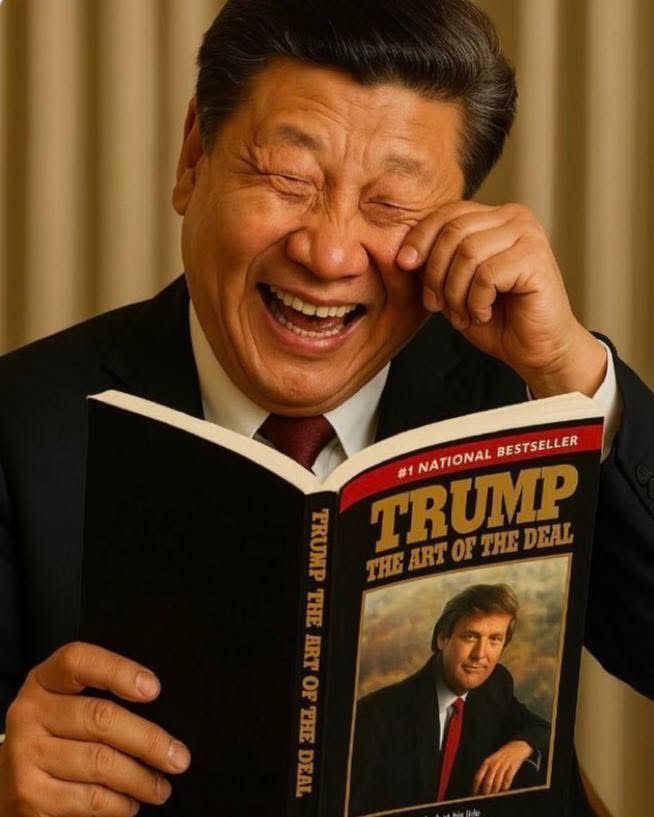
Donald Trump as soon as he became president of the US of A for the second time straight away launched tariffs war, purportedly to reindustrialise the US economy but in reality to deal a blow to China’s burgeoning trade.
But the problem with Trump is even though China is the target, he imposes sweeping tariffs on all countries – enemies and friends alike – which is akin to declaring economic war on all countries in the world.
When a superpower tries to take on all countries, the result is predictable – it loses the tariffs war, and so Trump capitulated by agreeing to a 90-day tariff truce with China.
Meanwhile, nations worldwide are seeking alternatives to the USD, with examples being China and Russia trading in their own currencies, and countries like India, Kenya and Malaysia advocating for dedollarisation or signing agreements with other nations to trade in local currencies or alternative benchmarks.
In part, this development is also due to the dollar’s dominance has rendered other economies susceptible to fluctuations in US monetary policy, often leading to spillover effects that may not align with their domestic economic conditions.
Furthermore, countries with substantial dollar-denominated debt may face heightened vulnerability to currency fluctuations and capital flow reversals, exacerbating the risk of financial crises.
As the world becomes more and more interconnected, the need for a stable and equitable financial system is paramount. And with that, the overreliance on the US dollar as a reserve currency has to some extent led to vulnerabilities and imbalances in the global economy.
These factors, combined with the growing economic power of emerging markets and their desire for a more diversified and resilient financial architecture, have spurred many countries’ interest in going ahead with dedollarisation.
In recent years, several countries and regions have embarked on the path towards dedollarisation, driven by a combination of geopolitical, economic, and strategic considerations.
Countries, like China and Russia, have sought to diminish the influence of the US dollar as a means of countering American hegemony and mitigating the impact of US sanctions.
Way back in 2020, Russian Foreign Minister Sergey Lavrov explained that Moscow is continuing “its policy aimed at gradual dedollarisation” and is looking to make deals in local currencies, where possible.
Lavrov called the rejection of the greenback “an objective response to the unpredictability of US economic policy and the outright abuse by Washington of the dollar’s status as a world reserve currency.”
He was more forthright when in a press conference on April 26, 2023, he said the US has proven they were not telling the truth when for many decades after Nixon’s abolishment of the gold standard they claimed:
“Well, don’t worry, even without being backed by gold, this isn’t our dollar. This is our shared common global currency that will ensure the functioning of all mechanisms of the global economies.”
To sum up: Dedollarisation isn’t just about countering US financial dominance that has enabled it to embark with impunity on regime change operations worldwide; it’s also about shielding one’s economy from the destructive vulnerabilities in the US-dominated financial system, including dollar liquidity shocks and sanctions risks, and diversifying trade settlements to mitigate potential harmful impacts of US monetary policy and financial instability.
And to top it all: Since the overreliance on the USD has to some extent led to vulnerabilities and imbalances in the global economy, this has crystalised the desire of the growing economic power of emerging markets and the Global South for a more diversified and resilient financial architecture, spurring many countries’ interest in going ahead with dedollarisation.
But dedollarisation is not the only game in town to annihilate the American passion and addiction to regime change operations, and stabilise the global economy from the destructive and reckless vulnerabilities in the US-dominated financial system.
Often misreported, BRICS is NOT launching a common currency (like the Euro). Instead, it is focussed on a KEY move of enhancing local currency trade via the following:
China-Russia “No Limits” Partnership which involves settling trade in yuan/roubles, bypassing the SWIFT mechanism.
Saudi Arabia joining BRICS where it is considering oil sales in yuan (a direct threat to the petrodollar).
India paying for Russian oil in rupees/dirhams, thus avoiding US sanctions.
Brazil and Argentina proposing a South American currency which reduces dollar dependence.
ANOTHER key move is building alternative financial systems with the following tools:
China’s CIPS (Cross-Border Interbank Payment System) – a SWIFT alternative with 1,400+ global banks.
Russia’s SPFS (SWIFT clone) – used by Iran, India, and others under sanctions.
BRICS “Bridge” Payment System which is a proposed gold-backed settlement system.
Digital currencies (CBDCs) – China’s digital yuan could bypass US sanctions entirely.
SWIFT bans, for instance, have pushed Russia, Iran and Venezuela into alternatives. Even now the EU nations are quietly using CIPS to avoid US secondary sanctions.
After the 2022 Ukraine war, Russia sold oil to India in yuan/dirhams, making sanctions useless.
YET ANOTHER key move is introducing new trade systems that are backed by gold and commodities. For this purpose, Russia and China are stockpiling gold – Russia’s central bank holds 2,300+ tons while China’s real gold reserves may be double official reports.
Moreover, African countries joining BRICS means key minerals like cobalt, lithium and platinum could trade in non-dollar systems.
This matters because gold-backed trade reduces inflation risks, unlike the US printing unlimited dollars. As an example, Zimbabwe (a BRICS candidate) now accepts gold as collateral for a new currency.
A FOURTH key move is developing military and diplomatic alliances to resist US pressure via:
China’s Belt and Road (BRI). This contrasts sharply with the US approach of sanctions in which infrastructure loans lock nations into yuan trade.
Russia-Iran “sanctions-proof” arms deals – drones, missiles and oil traded without dollars.
Expansion of SCO (Shanghai Cooperation Organisation) in which more countries are joining it as a NATO alternative.
Although SCO is not a formal military alliance like NATO in the sense it does not have a collective defence treaty or automatic military support mechanisms, yet it is a forum for cooperation that includes security policy issues.
While the SCO has been described as a potential “NATO of the East” in some Western media, it is more accurately described as a platform for dialogue, cooperation, and addressing security concerns within its member states.
Currently, nine countries enjoy the status of SCO full members: India, Kazakhstan, China, Kyrgyzstan, Russia, Pakistan, Tajikistan, Iran and Uzbekistan; three countries – Afghanistan, Belarus and Mongolia – have observer status; and six countries – Azerbaijan, Armenia, Cambodia, Nepal, Turkey and Sri Lanka – have a dialogue partner status.
This last key move (developing military and diplomatic alliances) meant the US can’t sanction everyone – if BRICS+ controls 40% of global GDP (PPP), coercion becomes harder. What’s more the 2023 Iran-Saudi rapprochement brokered by China has weakened US influence in the Middle East.
If BRICS unites on a gold-backed trade system, the US could lose its financial supremacy.
Finally, if BRICS dumps US Treasuries, this will trigger a global financial crisis which could force the US to face hyperinflation or forced austerity.
The US has never faced a rival economic bloc this powerful. If BRICS keeps expanding and replaces the IMF/World Bank, the era of cost-free US regime change wars could end.
Just saying …

MIRROR, MIRROR ON THE “BRICS BY BRICS” WALL, WHO’S THE WEAKEST LINKS AMONG THEM ALL
Just because I have said the US has never faced a rival economic bloc this powerful in the form of BRICS, it doesn’t mean that the US will take it lying down.
The dreaded and infectious disease of regime change that the West especially the Anglo Saxon US and UK had been and continues to be afflicted is so deep to the core, perhaps pre-ordained since the time of their forebears – Gog Magog (Yajuj wal Majuj) in Kazaria – that it is inconceivable that they will accept this challenge without a fight.
To begin with, BRICS is not a monolith. To be precise, it’s a coalition of rivals, not allies, held together by a shared desire to escape US financial and geopolitical dominance so that they will be free and independent in the true sense of the word.
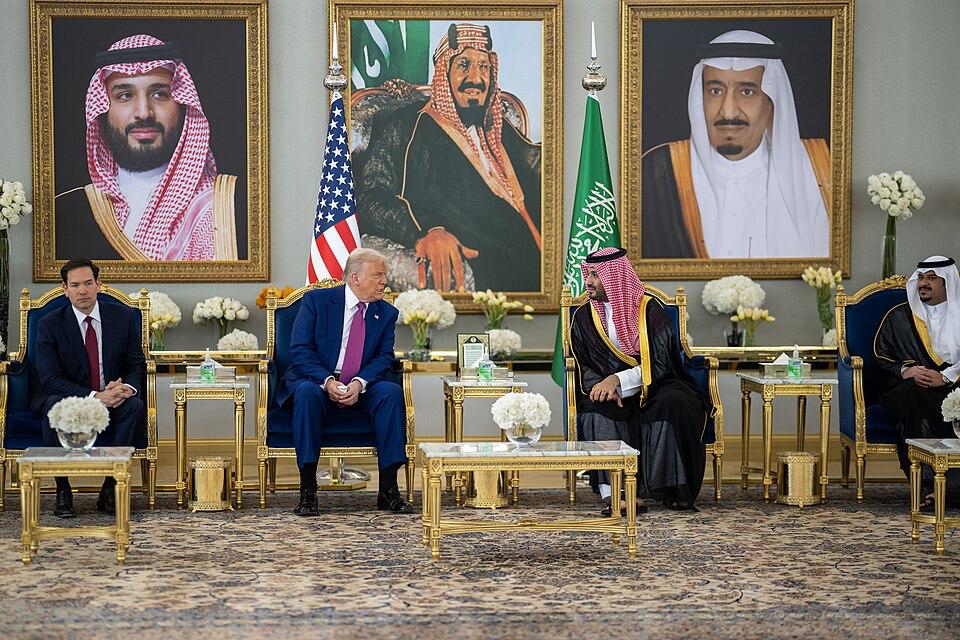
This makes BRICS vulnerable to divide-and-conquer tactics. To top it all, recent events like the India-Pakistan war and Donald Trump’s trip to the Middle East have shown how vulnerable BRICS is to the US machination of divide and conquer.
Many analysts find India – a founder member of BRICS – to be the Geopolitical Wildcard of BRICS rendering it as the weakest link.
For one thing, India is a strategic US ally as it is a part of the Quad grouping with US, Japan and Australia to counter China, a fellow BRICS member.
Its border conflicts with China which began during pre-BRICS time are still not over yet – the 2020 Galwan clash showed how easily BRICS unity can crack.
In the current India-Pakistan war, it is China-made fighter jets, its radar jamming tech and missiles that were instrumental in clinching a Pakistani victory for the first time in the conflicts which went back to the 1960s.
Moreover, India is still very dependent on the USD – 80% of India’s trade is dollar-denominated, hence it hesitates to fully join the dedollarization move.
And this is how the US exploits the BRICS crack between India and China:
Military and tech partnerships by selling F-35s, drones, and semiconductors to India to keep it in the Western orbit;
Encouraging India-Russia friction by pushing India to reduce Russian oil imports, which would hurt BRICS energy trade, and;
Silicon Valley influence in which US tech giants (Google, Microsoft) dominate India’s digital economy, ensuring soft power.
If China-India tensions escalate, India could drift toward the US, fracturing BRICS.
Secondly, the US could also zero-in on the vulnerabilities of economic disparities in South Africa and instability in Brazil. South Africa’s could face an economic collapse with frequent rolling blackouts, 33% unemployment, and still dependent on Western investment.
While Brazil’s political swings is a cause for concern because President Lula is pro-BRICS, but the next president could be another Bolsonaro (pro-US). Then there is currency weakness – the rand and real are volatile, thus both nations still need dollar reserves to stabilise.
The US can exploit this via:
Regime change lite (an innocuous or unthreatening version) by funding opposition media/NGOs (like it did against Lula in 2018);
Debt traps – IMF loans with strings attached (e.g. “privatize your energy sector”); and
Hybrid warfare by stirring unrest (e.g. Jan 2023 Brazil riots) to destabilize pro-BRICS leaders.
The kicker: If South Africa’s ANC loses power, or Brazil swings right, BRICS loses key voices.
Some analysts especially western ones see the China-Russia “marriage of convenience” as cracks beneath the surface and will exploit it to the hilt especially the analysts at the US State Department and its think tank affiliates.
They will argue Russia needs China more than vice versa as China buys Russian oil at a discount, but won’t share high-tech (e.g. semiconductors.
Also they will see Central Asia tensions as fertile ground to interfere since Russia sees China’s Belt and Road expansion into Kazakhstan and Tajikistan as encroachment on its sphere.
Then there is a long-term distrust i.e. historical Sino-Soviet splits could resurface if Putin falls or Xi changes strategy. I have touched on this in one of my previous articles.
This is how the US can further exploit the situation:
Sanction loopholes by turning a blind eye to China’s indirect support for Russia (keeping them in a tense middle ground);
Offering Russia secret deals such that if Putin’s regime wobbles, the US could dangle sanctions relief to pull Russia away, and;
Encouraging Central Asia revolts by using NGOs to fuel anti-China protests (like Kazakhstan’s 2022 unrest).
Many western analysts predict that if Russia’s war effort collapses, China might abandon it to save its own economy.
Then there is also the question of new BRICS members apart from the original five which some quarters have liken to a house divided. Iran, UAE, Egypt, and Ethiopia all have conflicts.
Sunni-Shia tensions (Iran vs UAE/Saudi Arabia) could flare up inside BRICS. While Egypt’s debt crisis may need IMF help, forcing it back toward the US.
As for the Ethiopia’s Civil War, if the US backs rebels, Addis Ababa could be pressured to quit BRICS.
This is how the US can exploit the situation further:
You can’t trust Iran” narrative by warning Gulf states that BRICS won’t protect them from Tehran, and;
Leveraging food and debt, as Egypt depends on US wheat, while Ethiopia needs World Bank loans.
Thus, BRICS expansion could dilute its unity, making it harder to agree on big moves like a gold-backed currency.
Finally, the US’ last resort tactics to break BRICS is its ultimate weapon of financial and military blackmail.
This will be achieved via:
-
Secondary sanctions on BRICS banks by threatening to cut off any bank trading in yuan/rupee if they also deal with Iran/Russia;
-
CIA-fueled coups whereby if, say, South Africa’s ANC radicalises, the US could back a pro-Western leader, and;
-
Navy blockades in the case BRICS tries to enforce a gold-backed currency, the US could then interdict shipments like it did to Venezuela’s oil.
So, can BRICS survive US pressure?
If BRICS stays united, it can slowly erode dollar dominance. But if the US successfully splits India, destabilises Africa, or triggers a China-Russia rift, the bloc could collapse.
In the final analysis, the deciding factor lies in firstly whether China is able to shield BRICS from sanctions via digital yuan or gold swaps, secondly how many nations abandon the IMF for a BRICS development bank, and finally whether the Global South truly believes in BRICS or just uses it to bargain with the West.
Just saying …
Recent posts
- Vol 4 No 52: Israel and its four fairy tales on Hamas [PDF]
- Vol 4 No 53: Unprecedented Iran’s slap on Israel’s face that has many firsts [PDF]
- Vol 4 No 54: The world in chaos [PDF]
- Vol 4 N0 55: Panic and despondency before the storm [PDF}
- Vol 4 No 56: The Iranian Art of War is driving Israel on the edge of an economic and military abyss [PDF]
- Vol 4 No 57: A watershed Brics Summit in Kazan, Tatarstan [PDF]
- Round-up of world news (July 29)
- Round-up of world news (August 12)
- Round-up of world news (August 26)
- Round-up of world news (September 2)
- Round-up of world news (October 17)
- Breaking News (23/10)
- Breaking News (24/10)
- Round-up of world news (October 29)
- Breaking News (31/10)
- Round-up of world news (November 4)
- Round-up of world news (November 12)
- The Gaza Ceasefire: Beyond the Headlines
- Eschatology + Seerah: Understanding the Gaza War through the lens of Isra’ Mi’raj
- TWO EVENTS THAT MAY TURN OUT TO BE UNEVENTFUL
- Sighting crescent moon with naked eye a religious obligation
- TWO EVENTS THAT MAY TURN OUT TO BE MUCH MORE EVENTFUL – PART 1
- TWO EVENTS THAT MAY TURN OUT TO BE MUCH MORE EVENTFUL – PART 2
- WHAT’S THE BEEF ABOUT TRUMP’S TARIFFS