APRIL 12, 2025

WHAT’S THE BEEF ABOUT TRUMP’S TARIFFS?


TARIFFS-MANIA: IT’S THE DEMILITARISATION AND DEINDUSTRIALISATION, STUPID!
In line with the Trump Administration pivoting away from the Biden administration’s mantra of the strategic defeat of Russia, to China as the ONE and ONLY strategic adversary, President Donald Trump’s tariffs-mania akin to the fun, exciting and entertaining wrestle-mania of the 1980s is actually the intended instrument to achieve a strategic defeat of China.
But unlike the Biden administration’s open and loud declaration of its strategic defeat of Russia mainly via the statements of its moronic and imbecile Tony Blinken who knows nuts about diplomacy, the Trump Administration never declares openly its strategic defeat of China, but the hint of it is very loud and clear for those who have eyes to see and ears to listen.
Last week (April 2), NBC reported the Pentagon has confirmed the US military will transfer two Patriot batteries and one THAAD battery from the US Indo-Pacific Command region to the US Central Command (Centcom) region, i.e. the Middle East.
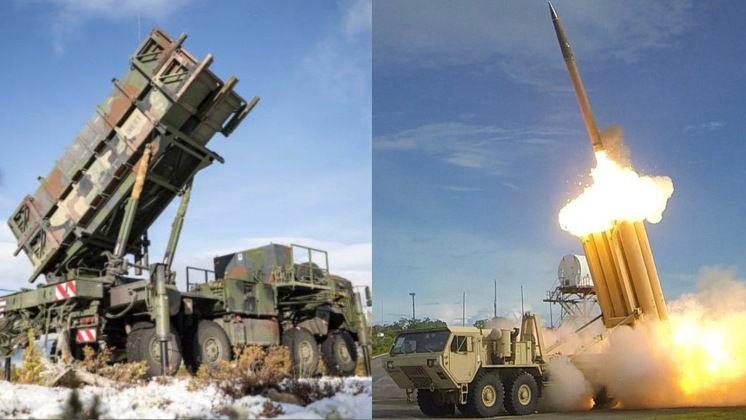
These missile defence systems will likely be moved to Arab countries in the Persian Gulf hosting American bases, where they will be used to increase the protection of US troops in the region against possible Iranian ballistic missile attacks in the wake of Iran’s threat to target US troops at the American bases in the Persian Gulf if the US and/or Israel bomb Iran.
If you read and rely on the western media, this is being hyped as a massive and unprecedented military mobilisation by the US is underway in the Middle East.
But insightful observers will not swallow what the western media says as this actually represents a weakening of the US Indo-Pacific Command – the military vanguard tasked with handling the strategic defeat of China – since its military hardware is being cannibalised for Centcom.
A strong US military will dispatch these missile defence systems from excess surplus in the USA itself, not from its Indo-Pacific Command. But the BIG problem is the US doesn’t have an excess surplus of these weaponries, hence the “cannibalism”.
The usual reason being touted for this is that a lot of these weaponries especially Patriot batteries which was not produced on an industrial scale had been sent to Ukraine to be destroyed by Russia, leaving the US with a dire shortage of surplus ammunitions and weaponries that it can’t even gave them to Ukraine as replacements since the US has enough of these only for its own needs.
Remember what the Head of the Department of Government Efficiency (DOGE), Elon Musk said: “American weapons programs need to be completely redone. The current strategy is to build a small number of weapons at a high price to fight yesterday’s war. Unless there are immediate and dramatic changes made, America will lose the next war very badly.”

For the US, this is a dicey situation because as a superpower it must not only have more than enough ammunitions and weaponries for itself, but also an excess surplus for it to dispense them to its allies fighting a proxy war on its behalf.
The REAL reason for this is actually the US military and its concomitant military-industrial complex (MIC) are facing the dual phenomena of DEMILITARISATION and DEINDUSTRIALISATION. The latter is also faced by the US economy as a whole.
Demilitarisation refers to the US having more than sufficient weapons and ammunitions to only defend itself because all of its surplus weapons and ammunitions have gone to Ukraine.
So when it needs weaponries and ammunitions to defend its bases in the Middle East for example, it has to resort to cannibalising them by sending these weapons, not from excess stocks in the US because there are none, but from its Indo-Pacific Command, thus demilitarising it.
And to make matter worse, its MIC is undergoing deindustrialisation where it could no longer produced weapons and ammunitions as fast as the Pentagon wants/needs it, forcing it to appeal to South Korea and Japan for assistance in a speedy delivery of Patriot system and ammunition shells to Ukraine for instance.
This ironically is brought about by globalisation, which was spurred by the US in the 1980s and 1990s which has resulted in the offshoring of its supply chains for its MIC to mostly China and India, and also Southeast Asia.
The main reason the US military finds itself in this kind of situation is because of its past experiences of winning quick and short wars (the opposite of long and arduous war of attritions) such that its MIC has a very good idea of the optimum amount of ammunitions and weaponries per year that the Pentagon needs.
Also, the production process that its MIC has chosen is the just-in-time production with higher productivity and greater flexibility to ramp up production in extraordinary situation.
But the neo-cons in the Biden administration did not consider the proxy war in Ukraine to be extraordinary.
Moreover, the delivery of ammunitions and weapons have already been done since the onset of the Minsk agreement in 2014 – a head-start of eight years before the full blown Ukraine War 2.0 occurred in 2022 – and the imposition of a shock and awe sanctions on Russia was already on the table.
The shock and awe sanctions boomeranged on the EU and US, contributing to further deindustrialisation via inflation and most likely stagflation (the coexistence of inflation and recession at the same time last seen in the 1970s) brought about by increased energy and food prices.
Make no mistake, if China is a warmongering nation like the US, Europe and Israel, it will certainly use this demilitarisation of the Indo-Pacific Command to attack the US troops there.
In this regard, it’s very telling that Trump’s pick to chair the Joint Chiefs of Staff, Lt. Gen. John Caine, just told the Senate what the rest of the world has already figured out: the US isn’t ready for a real war with China, not mentally, not industrially, not strategically.

“The Joint Force is contending with an acquisition process and defence industrial base that are not optimised for protracted conflict,” Caine admitted in written testimony on April 3. Translation? Wall Street gutted the arsenal of democracy to boost quarterly profits and now the Pentagon can’t keep up with the military it fantasises about fighting.
The general also warns that China’s military is modernizing at lightning speed, adjusting doctrine, building its navy (the largest in the world, by the way), and preparing to defend the Indo-Pacific with firepower, alliances, and deep patience.
Sure, Caine tries to comfort the Senate war hawks by claiming China “lacks commander proficiency” and “urban warfare experience.” But it rings hollow when even the US Army can’t recruit, can’t supply, and can’t even make enough munitions to support Ukraine, let alone fight a real, large-scale peer competitor like Beijing.
And here’s the kicker: the Pentagon knows it.
The guy tapped to lead America’s war machine is waving a red flag before stepping into the job. This isn’t “projecting strength” — it’s strategic confession. A loud admission that American hegemony is overstretched.
Meanwhile, Caine brought up the Russia-China-North Korea axis, claiming they’re not forming a NATO-style alliance. True, because they don’t need to.
They’re building something more potent: a non-Western coalition of sovereigns who don’t buy into dollar diktats, NATO gaslighting, or CIA regime-change campaigns.
It’s also very telling that while Beijing practises long-range strikes and deep-sea logistics, Washington’s elite was stuck debating which gender gets priority in the Air Force bathroom. Trump has fixed that abomination.
But the real alarm bell here isn’t for China, it’s for America’s own ruling class. Because when your own generals tell Congress you’re unprepared for a war you keep provoking, it’s not just embarrassing. It’s the prelude to imperial withdrawal.
History tells us what comes next.
And spoiler alert: it isn’t “peace through strength” — it’s managed decline, punctuated by necessity from a Deepstate hell bent on suicidal adventures.
Now because of the deindustrialisation mentioned above, the idea of onshoring its supply chains back to the US i.e. to reindustrialise is now gaining traction and momentum but this will take time.
However, the reality of thing taking its time is lost on Trump when he introduced this tariffs-mania aka liberation day tariffs to solve these problems of the demilitarisation and deindustrialisation of the American military, its MIC and the economy.
In essence Trump is actually in a deep hurry to bomb Gaza (via Israel), Yemen and Iran so that with these out of the way, it would be easier to vaporise China without the necessity of a long war.
It’s very true that Trump, the peacemaker and the dealmaker of the century doesn’t like war. In reality, however, he doesn’t like long wars and loves short wars. That’s why he backs away from attacking Iran after sending it threatening letter. Also, if the US bombing of Yemen turns into a long war, watch out again for Trump to back down.
Latest development on the Yemen’s front is that he’s already backing down when Telegram news channels quoting Centcom sources reported that the US has informed Ansarallah (i.e. the Houthis) that it is willing to stop the bombing campaign on Yemen, if the group promises not to attack American navy ships.
After using Yemen as a testing ground for bunker busting bombs intended to be used on Iran, the US military is reportedly ‘doubtful’ and ‘unconvinced’ that it could pull off a successful military strike on Iran’s nuclear facilities
The US military says it is unsure whether a strike on Iran would achieve the intended strategic objective, stating that the Iranian sites are ‘much deeper’ and more protected than Yemen’s underground bases, and that recent airstrikes on Yemeni missile infrastructure turned out ‘ineffective at best, useless at worst’.
But in act of bravado, Trump brags on social media about bombing a gathering of Ansarullah mujahideen. He must have thought the soldiers of Yemen don’t have bunkers and operate in the open riding camels into battle. His arrogance is only rivalled by his stupidity.
What his warplanes actually targeted was a tribal gathering of Yemeni civilians on the festive occasion of Eid al-Fitr – a war crime. In his bravado, he let slip a statement, “they will never sink our ships AGAIN”
Wait a minute, does that mean Ansarullah has already sunk a US warship? Did he just inadvertently admit the loss of a naval vessel?

This is also why remilitarisation and reindustrialisation in the US have to take place with the utmost swiftness of a Speedy Gonzalez so that Trump can prove to the world that talks about the emerging multipolar world and the decline of the Empire are all empty chatters.
And Trump should also realise that his liberation day tariffs-mania would only be successful in achieving the reindustrialisation of the US if at least 90 or so factories world-wide especially those owned by the US can successfully restart their onshoring operations back to US soils with the utmost lightning speed, especially in Ohio and Silicon Valley – a very tall order.
Using tariffs alone to revive US industry is like a fairy tale for adult. In the first place, US supply chains are dead and buried because decades of offshoring won’t magically reverse in the face of Washington stamps “Made in America” on a few policies.
Moreover, manufacturing jobs aren’t coming back because automation and neoliberalism have killed them. The real industrial revival isn’t in Ohio; it’s in China, India, and Southeast Asia, where labour is cheap, infrastructure is booming, and Washington’s sanctions are irrelevant. The US market isn’t what it once was, just look at China’s domestic market and demand alone.
As for investment, corporations will go where the numbers make sense, not where Trump or JD Vance’s economic nostalgia tells them to.
Trump says sweeping tariffs are needed to fix US trade imbalances. But this BS is being exposed by Singapore Prime Minister Lawrence Wong who said there is “nothing inherently wrong in running a trade deficit.

Speaking in Parliament on April 8, Wong said: “It simply means American consumers are buying more from the world than the world is buying from America. Moreover, the focus has been solely on the goods trade. That only gives a partial picture. In fact the US run a surplus with many of its trading partners in services – exporting software services, education, entertainment, financial and business services. But this aspect has been completely ignored.”
The US isn’t in an economic downturn, it’s in managed decline. The empire can’t print its way out of $36.6 trillion in debt and $200 trillion in unfunded liabilities. The tariff war won’t save Main Street; it’ll just make things more expensive before the final collapse.
And what happens when China, Russia, and the Global South send Washington its own bill, for coups, regime change, and illegal wars? That’s a tab even the Federal Reserve can’t cover.
The game is rigged, and Trump knows it – it’s very possible to achieve success at the reindustrialisation of the US economy and its MIC, and the remilitarisation of its military in the very, very long run but impossible during the short stint of four years of Trump’s second presidency or even eight years of his presidency should he manage to overcome objections to his third presidency if he’s elected again in 2028.
Just saying …

SPENDING LIKE THERE’S NO TOMORROW FOR REGIME CHANGE – THE FAUX PAS OF US DEFICIT ADDICTION
All turned out to be good when during the dying end of World War 2, the Great Powers assembled at Bretton Woods in 1944 to discuss and shape the post war international monetary system aka the Bretton Woods Agreement.
This Bretton Woods system saw the US dollar ascending to become the world’s primary reserve currency, and the only post-war currency linked to gold at US$35 per troy ounce.
The Bretton Woods system also saw the US dollar being used as the medium of exchange for international trade.
Meanwhile the US Treasury exercises considerable oversight over the SWIFT financial transfers network, and consequently has a huge sway on the global financial transactions systems, with the ability to impose sanctions on foreign entities and individuals.
SWIFT stands for the Society for Worldwide Interbank Financial Telecommunications system and it powers most international money and security transfers.
It is a vast messaging network used by financial institutions to quickly, accurately, and securely send and receive information, such as money transfer instructions.
At that time, the USD and sanctions weren’t weaponised against countries that the US just didn’t like, and so everything was fine.
In retrospect, the choice of the USD as the world’s reserve currency then aka dollarisation was justified and made perfect sense, as the dollar’s prominence has been underpinned by the size and strength of the US economy, the deep and liquid US financial markets, and the perception of the US as a bastion of stability.
The dollar’s ubiquitous presence in global trade, finance, and investment has endowed it with significant advantages, such as lower transaction costs, reduced exchange rate risk, and the ability to finance deficits at relatively lower costs.
This is all okay as long as the US is discipline and responsible in managing its fiscal deficits.
However, irresponsibility and recklessness came to the fore when rising government spending in the 1960s, led to doubts about the US’ ability to maintain the convertibility between gold and the USD.
A big portion of this increased expenditure went to its military-industrial complex (MIC) and intelligence services to finance its regime change operations throughout the post-war period beginning with Iran in 1953 (Operation Ajax approved by president Dwight Eisenhower to overthrow PM Mohammad Mossadegh).
Soon it was Guatemala’s turn – Operation PBSuccess in 1954 approved again by president Eisenhower to overthrow President Jacobo Árbenz, followed by Cuba in 1961 with the Bay of Pigs Invasion where president John Kennedy was “tricked” by the CIA into approving it but it turned out to be a failed attempt to overthrow Fidel Castro.
It’s then the turn of South Vietnam in 1963 with the US-supported coup against president Ngô Đình Diệm, approved by president Kennedy; Ngo was later executed, deepening US involvement in Vietnam.
Brazil was next in 1964 with the CIA-supported military coup against leftist President João Goulart approved by president Lyndon Johnson, leading to a 20-year dictatorship, and finally Chile in the 1973 CIA-backed coup against socialist President Salvador Allende, approved by president Nixon, leading to General Augusto Pinochet’s dictatorship.
These deep and reckless spending on regime change worsened the situation when gold stocks started to dwindle as banks and international investors began to convert dollars to gold, resulting in the decline of the dollar.
Facing an emerging currency crisis and the imminent danger that it would no longer be able to redeem dollars for gold, this convertibility was finally terminated in 1971 by president Richard Nixon, culminating in the “Nixon shock” – a series of economic measures undertaken in 1971, in response to increasing inflation (very familiar now right?), the most significant of which were wage and price freezes, surcharges on imports (akin to tariffs), and the unilateral cancellation of the direct international convertibility of the US dollar to gold.
Although Nixon’s actions did not formally abolish the Bretton Woods system of international financial exchange, the suspension of one of its key components (gold-dollar convertibility) effectively rendered the system inoperative.
While Nixon publicly stated his intention to resume direct convertibility of the dollar to gold after reforms to the Bretton Woods system had been implemented, all attempts at reform proved unsuccessful. By 1973, the current regime based on the de facto freely floating fiat currencies replaced the Bretton Woods system.
Another related concept to the dollarization is the concept of petrodollar where all international trading in oil must use the US dollar.
Conspiracy theories abound that Saddam Hussain of Iraq and Muamar Gaddafi of Libya were murdered because they had the gall to refute the petrodollar by advocating the dinar as the currency for their oil trading (petrodinar).

Hence Iraq and Libya, on the instigation of the neo-cons were reduced to rubbles via regime change and become failed states to this day.
But when China and Russia dared to refute the petrodollar by using the yuan (petroyuan) and the roubles (petroroubles) in their oil trading, the US is powerless to turn the yuan or roubles into rubbles because it underestimated both China and Russia.
It lumped Russia as just another third world country like Iraq and Libya, or in the words of the now dead Senator John McCain, “a gas station masquerading as a country”.
Must be a neo-con then isn’t it, this dead senator for his disdain of communism, forgetting the fact that when he made this statement in 2015 while he was still alive and kicking, Russia was no longer a communist country since 1991!
The reprieve brought about by the replacement of the Bretton Woods system with the present system based on the de facto freely floating fiat currencies in 1973 didn’t last long.
Just to ensure that this is not confusing, the system of freely floating fiat currencies that replaced the Bretton Woods system last till today. The reprieve I’m referring to is the BIG problem faced by the US associated with the failure of the US to sustain the gold-dollar convertibility was solved via this fiat currencies system without causing much harm to the US.
Russian Foreign Minister Sergey Lavrov alluding to this said the US has proven they were not telling the truth when for many decades after Nixon’s abolishment of the gold standard they claimed: “Well, don’t worry, even without being backed by gold, this isn’t our dollar. This is our shared common global currency that will ensure the functioning of all mechanisms of the global economies.”
Despite this reprieve, the US’ addiction to regime change and bombing other countries to kingdom come went unabated when in 1979, the CIA secretly supported Islamist militants in Afghanistan (approved by president Jimmy Carter) against the Soviet-backed government, contributing to the rise of the Mujahideen (and later the Taliban).
This was followed in 1983 by the US invasion of Grenada approved by president Ronald Reagan to overthrow the Marxist government of Maurice Bishop (Operation Urgent Fury).
In 1989, it was Panama’s turn when the US invaded it with the approval of president Bush Senior to remove President Manuel Noriega (Operation Just Cause), installing a pro-US government.
All these regime change operations took place in the context of a bipolar world that featured two competing superpowers – the US which held sway in the western world (primarily western Europe), and the USSR aka the Soviet Union, holding sway in eastern Europe.
But in 1991, the Soviet Empire unexpectedly gave way to self-destruction which ushered in a new unipolar world with the US becoming by default the sole superpower of the unipolar world.
With no alternative superpower constraining the US, it has a field day in ushering colour revolution and regime change operations in many parts of the world, causing so much misery to the world.

Some of these post-cold war operations:
The US supported the coup against President Jean-Bertrand Aristide in 1991 approved by president Bush Senior (later restored in 1994 under US pressure).
The US invasion in Afghanistan in 2001 that overthrew the Taliban after 9/11, installing a pro-Western government, approved by president George W Bush.
The NATO-led intervention of Libya in 2011 (with strong US involvement approved by president Barack Obama) led to the overthrow and killing of Muammar Gaddafi.
The failed attempt to overthrow Venezuelan President Nicolas Maduro in 2019 approved by president Trump. Having failed in the regime change attempt, the US recognized Juan Guaidó as “interim president”.
These are all overt and direct US involvement in its evil attempt at regime change which caused so much havoc and instability in the world.
As for its covert and indirect interventions to become the Master of the Universe, these include:
Supported rebel groups seeking to overthrow President Bashar al-Assad, approved by president Obama.
Supporting the Euromaidan protests in 2014, approved again by Obama which led to the ouster of pro-Russian President Viktor Yanukovych.
The US has NEVER STOPPED engaging in regime change operations, though the methods have shifted from direct invasions (Iraq, Panama and Afghanistan) to proxy wars (Syria, Ukraine) and economic pressure (Venezuela, Iran).
The ease with which the US can embark so many times on these regime change operations without giving much thought to the growing enormous deficits that it sustains is mainly due to the position of the USD as the only reserve currency of the world (dollarisation of the world) and the operation of the petrodollar.
These make it relatively easier and cheaper for the US to accumulate astronomical deficits at the expense of the world. But these are not sustainable, and the US knows it.
The first unsustainability occurred in 1973 with the breakdown of the Bretton Woods international financial order, when gold-dollar convertibility was ended. But the de facto system of freely floating fiat rescued the US.
Henceforth the US sustains its massive spending on regime change operations and its broader military-industrial complex despite record budget deficits through a combination of financial dominance, economic leverage, and geopolitical coercion. Here’s how it works:
The USD Reserve Currency Status
The dollar makes up approximately 60% of global foreign reserves, meaning the world must hold dollars to trade oil, commodities, and debt – creating an infinite demand for US Treasury bonds, allowing the US to borrow cheaply (deficit spending) without immediate collapse. If any country (e.g. Iraq, Libya) tries to abandon the dollar, the U.S. can sanction or overthrow them, as seen in what happened to Saddam and Gaddafi’s gold dinar plan.
Debt Monetization And Financial Repression
The Federal Reserve prints money to buy US debt (quantitative easing, QE), keeping interest rates artificially low. Meanwhile inflation erodes the real value of debt over time – effectively a hidden tax on dollar holders worldwide, while foreign central banks (China, Japan, EU) must keep buying Treasuries to prevent their own currencies from exploding in value (which would kill exports).
Military-Industrial Complex And War Profiteering
Lockheed Martin, Raytheon, Boeing, etc profit from wars, ensuring political lobbying keeps defence budgets growing. Moreover regime change operations create long-term dependencies – new puppet governments buy US weapons, host bases, and sign trade deals, e.g. $2.3 trillion spent on Afghanistan was a money pit, but defence contractors made record profits.
Economic Coercion And Sanctions
The US freezes assets, cuts off SWIFT access, and imposes sanctions on nations that resist (Iran, Venezuela, Russia). This forces compliance, ensuring that even failed regime changes (e.g. Syria) still weaken adversaries, e.g. after the 2014 Ukraine coup, the US sanctioned Russia and seized $300B+ in reserves.
The “Exorbitant Privilege” of US Financial Power
Because global trade runs on dollars, the US can run deficits indefinitely unlike any other nation. If the system cracks (e.g. BRICS dedollarization), the US escalates to military threats (e.g. patrolling oil chokepoints like the Strait of Hormuz).

So it seems like there’s no endgame to this massive addiction of the US for deficits. But the endgame actually lies in the following:
The US can sustain this only as long as the dollar remains unchallenged, no rival coalition (China/Russia/BRICS) creates an alternative system, Americans tolerate inflation and rising debt (currently $34 trillion+).
Once these pillars weaken, the US empire will face a reckoning but for now, the addiction continues.
Just saying.
Read more:
Business Today: The decline of the US Empire
The Vibes: Dedollarisation – the end of US hegemony in global finances
The economy and US presidential election: Ticking time bomb for Israel’s defeat
Brics-11: The dawn of a new era
China and Russia are the peacemakers of the Islamic world
NST: China and Russia – peacemakers in the Middle East with a difference

Recent posts
- Vol 4 No 52: Israel and its four fairy tales on Hamas [PDF]
- Vol 4 No 53: Unprecedented Iran’s slap on Israel’s face that has many firsts [PDF]
- Vol 4 No 54: The world in chaos [PDF]
- Vol 4 N0 55: Panic and despondency before the storm [PDF}
- Vol 4 No 56: The Iranian Art of War is driving Israel on the edge of an economic and military abyss [PDF]
- Vol 4 No 57: A watershed Brics Summit in Kazan, Tatarstan [PDF]
- Round-up of world news (July 29)
- Round-up of world news (August 12)
- Round-up of world news (August 26)
- Round-up of world news (September 2)
- Round-up of world news (October 17)
- Breaking News (23/10)
- Breaking News (24/10)
- Round-up of world news (October 29)
- Breaking News (31/10)
- Round-up of world news (November 4)
- Round-up of world news (November 12)
- The Gaza Ceasefire: Beyond the Headlines
- Eschatology + Seerah: Understanding the Gaza War through the lens of Isra’ Mi’raj
- TWO EVENTS THAT MAY TURN OUT TO BE UNEVENTFUL
- Sighting crescent moon with naked eye a religious obligation
- TWO EVENTS THAT MAY TURN OUT TO BE MUCH MORE EVENTFUL – PART 1