


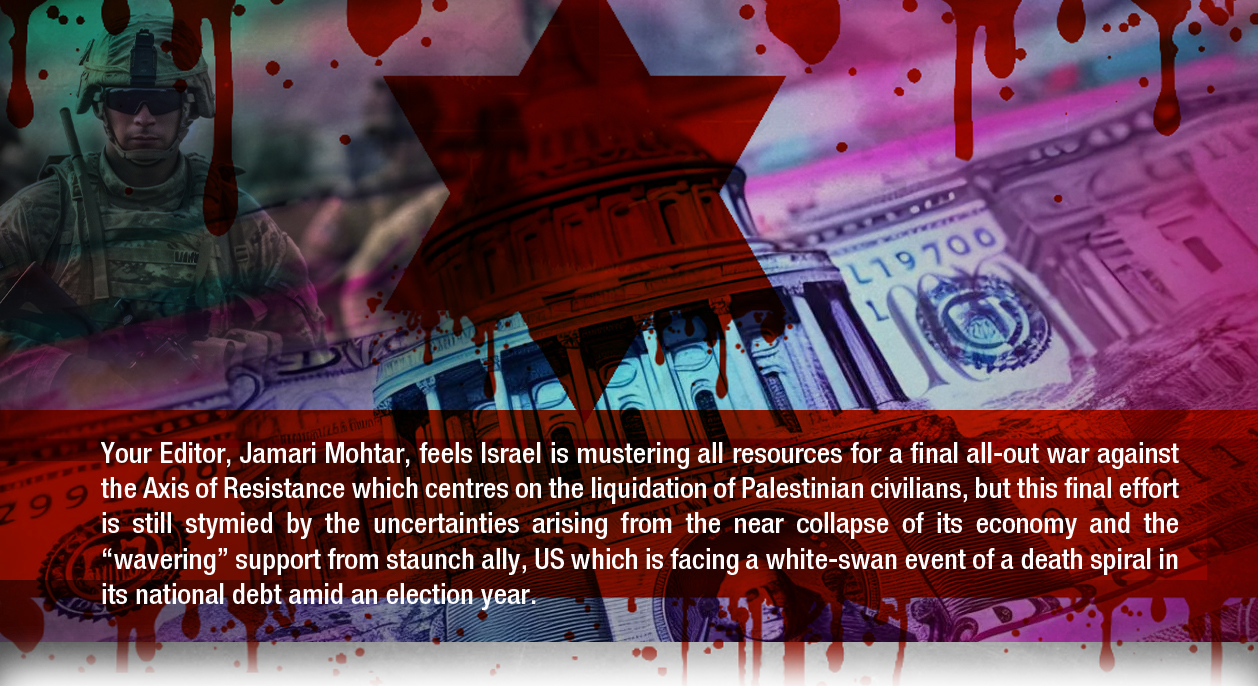

- The famous election slogan of Bill Clinton, “It’s the economy, stupid!” was very instrumental in catapulting the underdog Clinton to victory in the 1992 US presidential election.
- Just imagine the incumbent then, President George HW Bush had scored two big victories in the American forever wars for regime change against “dictator” Saddam Hussein of Iraq in 1991, and earlier in 1989 against Panama’s “dictator” General Manuel Noriega.
- But despite these “outstanding” credentials, Bush senior was beaten hollow by Clinton in what had been described as an unexpected, big upset, and Bush became a one-term president.
- Perhaps the Bush campaign then had misjudged the electorates who were aghast at the “known fact” that these two dictators were in the pay of CIA long before they became the presidents of their own country.
- The vast sums of monies paid over the years to these two dictators, and still the vaster amount spent on the unnecessary forever wars on both Iraq and Panama to topple them would definitely have taken a toll on the US economy.
- Thus, with or without the election sloganeering of the Clinton campaign, the writing was already on the wall for Bush to be a one-term president.
- Now fast forward to the current presidential election, the national debt is now a ticking time bomb. In January, US Treasury Secretary Janet Yellen said that the absolute level of US public debt looks like “a scary number.”
- She urged the government to take steps“to make sure that our deficits come down.”
- Jamie Dimon, head of JPMorgan, the nation’s largest bank, also recently warned that the US economy is on its way towards a major crisis unless Washington gets its acts together in ensuring the debt pileup is under control.
- US government debt has reached an unprecedented level of $34 trillion at the end of December 2023. With a population of 341 million, this means a debt burden of approximately $100,000 per each American citizen.
- Even those in their mother’s womb now will be born with a burden of carrying this $I00,000 debt. In 2023 alone, the national debt grew by almost $4 trillion.
- This escalating debt pile is akin to a “death spiral” that only a “miracle” could extract the country from, economist and ‘Black Swan’ author Nassim Taleb said as quoted by Bloomberg.
- Taleb defined the expanding US debt load as a “white swan,” meaning a risk event that is highly predictable and more probable than a “black swan” event, a metaphor describing an occurrence that comes as a complete surprise.
- “So long as you have Congress keep extending the debt limit and doing deals because they’re afraid of the consequences of doing the right thing, that’s the political structure of the political system, eventually you’re going to have a debt spiral,” Taleb said. “And a debt spiral is like a death spiral.”
- According to Taleb, a former trader who is best known for publishing several bestselling books on economics, white swans include both the US deficit and the American economy that has grown more vulnerable to shocks than in previous years.
- He described such vulnerability a feature of globalisation, as problems in one region can ricochet around the world.
- When asked how the US “debt spiral” could play out, Taleb said, “we need something to come in from the outside, or maybe some kind of miracle,” adding that this makes him “kind of gloomy about the entire political system in the Western world.”

- The discussion on national debt can be rather confusing because of the so many terminologies associated with it. All these terminologies are actually different aspects of the same thing.
- So let’s have a primer on national debt. The national debt is composed of distinct types of debt, similar to an individual whose debt consists of a mortgage, car loan, and credit cards.
- The national debt can be broken down depending on whether it is non-marketable or marketable and whether it is debt held by the public or debt held by the government itself known as intergovernmental.
- The national debt does not include debts carried by state and local governments, such as debt used to pay state-funded programmes; nor does it include debts carried by individuals, such as personal credit card debt or mortgages.
- There are two major categories for federal debt: debt held by the public and intragovernmental holdings. Note that the latter is different from state and local governments debt mentioned earlier.
- They refer to more of the debt owed by the state/local governments to the federal government or vice versa, and has nothing to do with debts raised by the local/state government that are used to pay state-funded programmes.
- What’s more important is to bear in mind the following facts when discussing the national debt – firstly it is the total amount of money that a country owes creditors, representing the sum of past deficits.
- Secondly, the federal government’s annual budget deficit, or its fiscal deficit, is a separate issue although related to the national debt.
- To be precise this fiscal deficit in itself is not the national debt, rather it is the sum of past deficits that constitute the national debt.
- The deficit occurs when spending throughout the year exceeds government revenue from sources that include taxes on personal income, corporate income, and payroll earnings.
- Confusion arises because government debt is also known as national debt or federal debt or public debt. It’s money borrowed by the government to pay for its expenses.
- The national debt in the US is primarily held by the American public, followed by foreign governments and US banks and investors. The latter includes both US nationals and foreigners.
- US’ national debt in dollars is generally viewed as less important than its proportion to the country’s gross domestic product (GDP) or the debt-to-GDP ratio.
- This is because a country’s tax base grows alongside its economy such that it increases revenue that the government can raise to service the debt.
- Economists focus on the ratio of debt to a nation’s GDP precisely because it is an indicator of its sustainability. The US national debt-to-GDP was 120.13% at the close of the third quarter of 2023.
- Then there is also sovereign debt issued by the government, usually in the form of securities. And to ‘confuse’ you further, sovereign debt is also referred to as government debt, federal debt, public debt, or national debt.

- This is so because governments also borrow for public investments and to boost employment, and not just to repay (or service) its current outstanding debt.
- The level of sovereign debt and its interest rates reflect the saving preferences of a country’s businesses and residents and the demand from foreign investors.
- Governments acquire sovereign debt by issuing bonds, bills, debt securities, or loans from countries and multilateral organisations like the IMF.
- Sovereign debt may be owed to foreigners or the country’s citizens and can be denominated in domestic or foreign currency.
- Although lenders always take on default risk, sovereign borrowing has several distinct characteristics. Unlike private borrowers, governments can raise tax revenue, and most also issue their own currency.
- Governments can be overthrown by regimes that refuse to honour their debt obligations or incur economic sanctions that may cause their debt to lose value.
- Sovereign borrowers in default are rarely subject to legal enforcement, and creditors often find it hard to target the defaulted sovereign’s assets.
- Some sovereign debt securities have linked coupon payments to a country’s economic growth rate, though such GDP-linked bond issues are relatively rare.
- Short-term US government and foreign debt securities maturing within months are known as Treasury bills, T-bills, or simply bills, while sovereign or private debt security with a duration measured in years is called a bond.
- Several private agencies often rate the creditworthiness of sovereign borrowers and the securities they issue.
- Countries with stable economies and political systems are typically viewed as having better credit, allowing them to borrow on more favourable terms.
- In August 2023, Fitch Ratings downgraded the long-term ratings of the US to “AA+” from “AAA” based on the expected fiscal deterioration over the next three years, a high and growing general government debt burden, and the erosion of governance relative to “AA” and “AAA” peers over the last two decades with repeated debt limit standoffs and untimely resolutions.
- As of September 2023, Standard and Poor’s assigned AAA sovereign credit ratings to Australia, Canada, Denmark, Germany, Liechtenstein, Luxembourg, Netherlands, Norway, Singapore, Sweden, and Switzerland.
- In a default, the creditors’ main leverage lies in the resulting loss of international capital markets access for the defaulting sovereign and its likely need to negotiate a debt settlement to be able to borrow again.
- Some academic studies have found prior defaults have little or no effect on future lending terms. One study concluded that higher losses in sovereign debt restructurings were associated with more prolonged periods of market exclusion and higher borrowing costs.
- Let’s now move on to the history of US national debt.
- January 1835 marked the first and only time all of the government’s interest-bearing debt was paid off, according to the Treasury Department.
- President Andrew Jackson, who was suspicious of banks and did not trust the paper money they issued, liquidated the Second Bank of the United States, returning the government’s original investment plus a profit.
- As a result, the government had a huge surplus of money, at $17.9 million, far greater than the actual government expenditures for the year. Congress divided the surpluses among the states, which were bogged down with debt.
- Remember this is not about national debt per se but the federal government’s annual budget (fiscal) deficit/surplus.
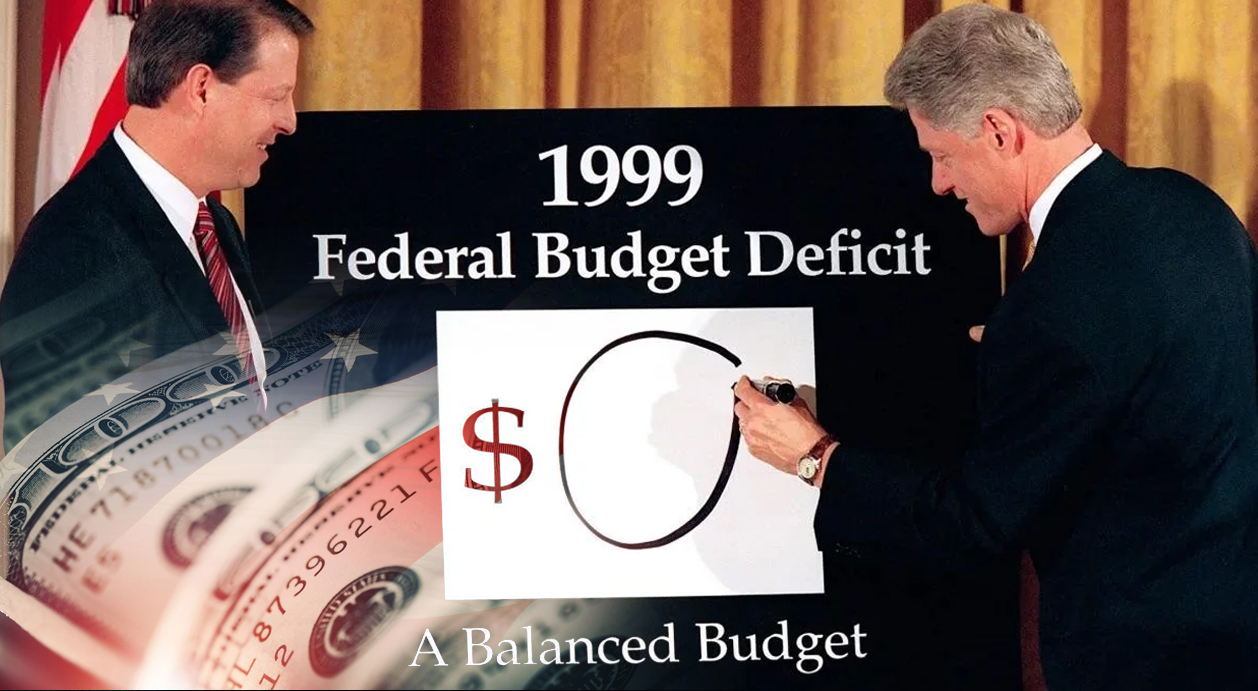
- After a lapse of more than a century, a second instance of a similar huge budget surplus occurred in 1998 during the Clinton administration.
- Clinton was so enamoured of his success, justified in your editor’s view, that a White House website dated Sept 30,1998 had the following post:
- “Today, at a White House event, President Clinton announces that the federal budget, which had run at a deficit for 29 years, has been balanced, and will run a surplus of roughly $70 billion for the fiscal year that ends today.
- “By balancing the budget, we have done more than renew our economy; we have sparked new confidence and renewed faith that progressive government can act in the national interest.
- “Today, America’s fiscal house is in order, after three decades of budget deficits, today marks the final day of fiscal year 1998 – the first year the US government will record a budget surplus since 1969. Instead of a $357 billion deficit, we will have roughly $70 billion in surplus this year.”
- Despite this surplus, the US still experienced an increase in national debt of $5.66 trillion in 1999 from $5.53 trillion the previous year. But at least the increase was less than a trillion dollar i.e. $0.13 trillion, or $130 billion.
- In 2002 when the “neo-con” administration of President George W Bush was in power, the US debt escalated to $6.23 trillion, mainly due to the War on Terror that Bush had unleashed.
- By the time of the second Iraq war in 2003, US debt has escalated in 2004 to $7.38 trillion. In 2008 the national debt increased for the first time by more than $1 trillion.
- 2008 was also the year it reached a double digit trillion for the first time at $10.03 trillion, again during the Bush administration due to the bank bailout crisis that engendered the Great Recession and the concomitant quantitative easing (QE) policy to fight the recession by artificially keeping interest rate very low.
- In 2012, the US debt ballooned to $16.01 trillion due to a fiscal cliff, defined as a situation in which a country faces a combination of automatic tax increases and spending cuts, leading to a sudden reduction in the budget deficit.
- This typically occurs when certain laws or budgetary measures are set to take effect at the same time, potentially having a significant impact on the economy.
- The term “fiscal cliff” gained prominence in the US in late 2012 when a series of tax cuts were set to expire, and automatic spending cuts were scheduled to take place.
- The concern was that the simultaneous implementation of these measures could lead to a sharp contraction in economic activity. Governments often face the challenge of finding a balance between reducing budget deficits and ensuring economic stability.
- A fiscal cliff scenario underscores the potential risks and challenges associated with abrupt and significant changes in fiscal policy. Policymakers may need to navigate such situations carefully to minimise negative effects on the economy.
- Despite ending the QE in 2014 by the Obama administration, US debt in that year continued to rise to $17.8 trillion due mainly to the debt ceiling crisis.
- The debt ceiling refers to a limit imposed by Congress that sets the maximum amount of outstanding debt the US can incur.
- The debt ceiling does not directly limit government deficits, as in effect it can only restrain the Treasury from paying for expenditures and other financial obligations after the limit has been reached, but which have already been earlier approved (in the budget) and appropriated.
- Before 1917, the US had no debt ceiling, as it is Congress which either authorised specific loans or allowed the Treasury to issue certain debt instruments and individual debt issues for specific purposes. Sometimes Congress gave the Treasury discretion over what type of debt instrument would be issued.
- The US first instituted a statutory debt limit with the Second Liberty Bond Act of 1917. This legislation set limits on the aggregate amount of debt that could be accumulated through individual categories of debt (such as bonds and bills).
- In 1939, Congress instituted for the first limit on total accumulated debt over all kinds of instruments.
- Thus, the first debt limit was established to give the Treasury autonomy over borrowing by allowing it to issue debt up to the ceiling without congressional approval, making it easier to finance mobilisation efforts in World War II.
- Before that, Congress generally had to authorise the Treasury to borrow in smaller increments.
- Since the 1950s, a vote to increase the debt ceiling has usually been a legal budgetary formality between the President and Congress.
- But the US began accumulating more debt as it got involved in more of its forever wars abroad. After entering World War II, the US raised the debt limit every year to accommodate increased borrowing.
- According to the Bipartisan Policy Centre, “by the end of the war, in June 1946, the debt limit is lowered to $275 billion as war costs dissipate and the federal government begins to run three years of surpluses.
- The federal debt limit remains unchanged at this level for eight consecutive years – the longest such period since its inception.
- In 1979, to avoid potential problems of hitting a default, the “Gephardt Rule” was imposed in which it was deemed the debt ceiling was raised when a budget was passed.
- This resolved the contradiction in voting for appropriations but not voting to fund them. The rule stood until it was repealed by the Republican-controlled Congress in 1995.
- As of 1993 the debt ceiling had not historically been a political issue that would make the elected government fail to pass a yearly budget.
- The debt-ceiling debate of 1995, however, led to a showdown on the federal budget and resulted in the first ever US federal government shutdowns of 1995 and 1996.
- There is a debate among legal scholars regarding the constitutionality of the debt ceiling. Some scholars argue the debt ceiling does not provide the legal authority for the US to default on its debt.
- Others said the debt ceiling itself is unconstitutional since it does not provide a clear mechanism for the government to meet its constitutional obligation to repay its debts once it meets the borrowing limit.
- When the debt ceiling is reached without an increase in the limit having been enacted, Treasury will need to resort to “extraordinary measures” to temporarily finance government expenditures and obligations until a resolution, known popularly as continuing resolution (CR) can be reached.
- The Treasury has never reached the point of exhausting extraordinary measures resulting in a constitutionally questionable default, although, on some occasions, it appeared that Congress might allow a default to take place.
- If this situation were to occur, it is unclear whether the Treasury would be able to prioritise debt payments to avoid a default on its bond obligations.
- A protracted default could trigger a variety of economic problems including a financial crisis, and a decline in output that would put the country into an economic recession.
- In the last two decades, the US has added $25 trillion in debt, spending nearly $1 trillion more than it receives in taxes and other revenue every year since 2001 – in large part due to financing wars, tax cuts, emergency responses and expanded federal spending.
- To make up the difference, the government has to borrow money to continue to finance payments that Congress has already authorised.
- Currently, the debt ceiling has been suspended altogether as of June 3, 2023, when president Joe Biden signed the Fiscal Responsibility Act of 2023 into law.
- It looks very funny that a suspension of debt limit so that the country can continue to spend until the cows come home is considered “fiscal responsibility”.
- But never mind because it ended the 2023 US debt-ceiling crisis that began on January 19, 2023. The suspension will remain in effect until January 1, 2025.
- Previously, in December 2021, the debt ceiling was raised when it was increased by $2.5 trillion to $31.381463 trillion, which lasted until January 2023.
- The necessity for that increase was because the Covid years has upped the national debt in 2021 to $28.43 trillion from $22.72 trillion in 2019, obviously either hitting or about to hit the existing debt limit.
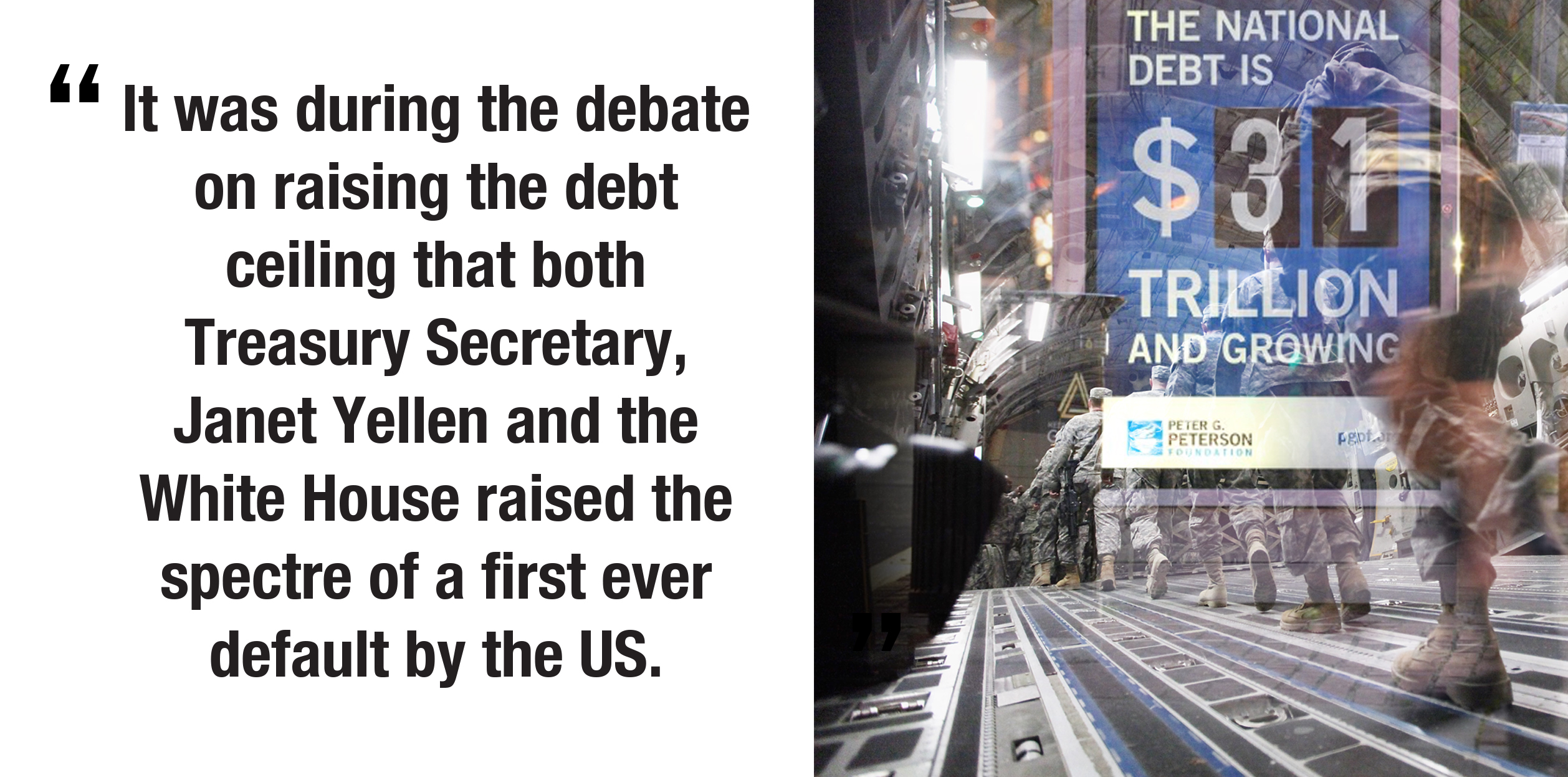
- It was during the debate on raising the debt ceiling that both Treasury Secretary, Janet Yellen and the White House raised the spectre of a first ever default by the US.
- According to Yellen, “the US has always paid its bills on time” and if Congress does not raise the debt ceiling, “America would default for the first time in history.”
- Most analysts now take default as a moot point because the debt ceiling has been suspended. But your editor thinks that the occurrence of a default has nothing to do with debt ceiling.
- Default simply means the inability to pay debt at the appointed time and this inability includes for example the obstinate refusal to pay due to politicking regardless of whether a debt limit exists or not.
- As mentioned earlier the last time a new debt ceiling was introduced was in 2021 when it was set at $31.381463 trillion.
- But just a year later in 2022, the national debt has bloated to $30.93 trillion, and by 2023 it was $34 trillion, an increase of almost $4 trillion in just one year.
- The hefty increase in the national debt in 2022 and 2023 were mainly the result of reckless spending on project Ukraine by the Biden administration whose cabinet is dominated by the neo-cons.
- Since early 2022, in an attempt at a crushing strategic defeat of Russia and the spending on arming Taiwan to contain China which the US sees as its real strategic rival – all in the context of its forever wars of regime change – the Biden administration has nearly bankrupted the US Empire, saddling it with debts upon debts.


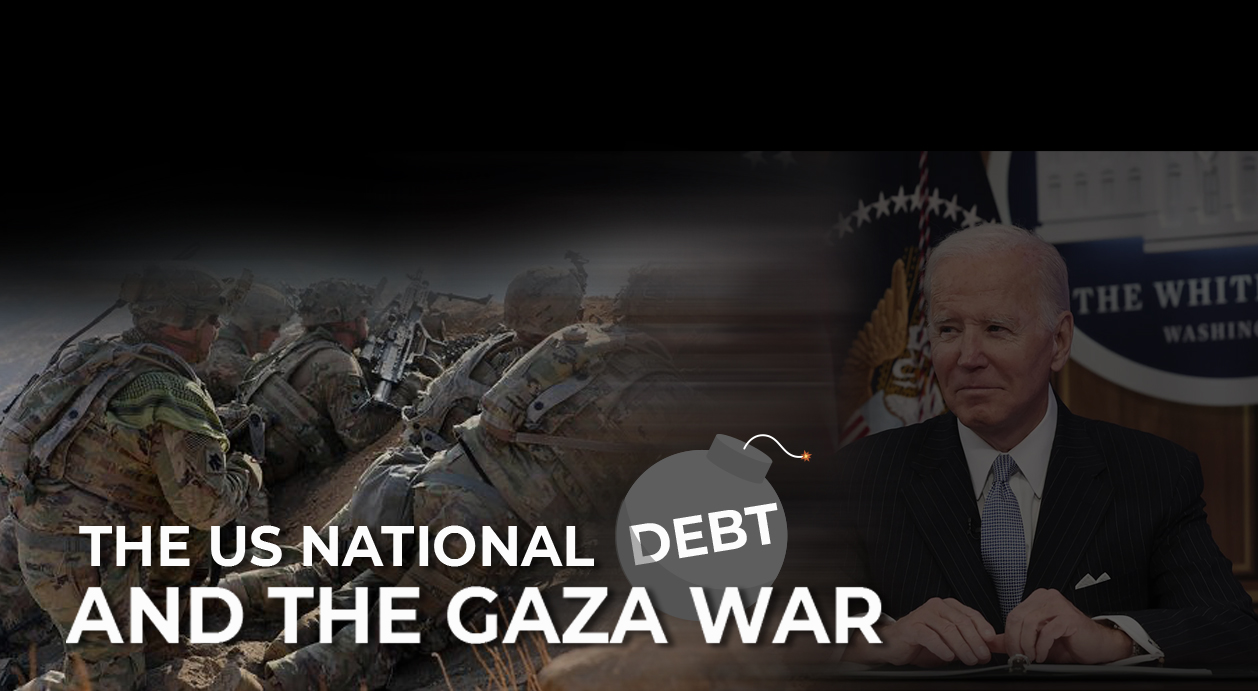
- Despite the dire state of the US national debt, the Biden administration is still bent on funding Ukraine and Israel in its forever (proxy) wars that in the first place had brought the US debt to its present death spiral.
- The US debt can be seen as a ticking time bomb for the US from many perspectives.
- Whether the funding bill to allocate $95 billion to Ukraine and Israel is stalled, rejected or approved by Congress, it will have an uncertain effect on Biden’s chances of being re-elected.
- Although the situation in Ukraine is far more critical than Israel in term of the need for funding, there’s no Ukrainian lobby in the US that is as powerful as the Jewish lobby Aipac that funding for Ukraine is not a factor at all on this issue.
- If it’s stalled indefinitely (already for more than three months now) or rejected by Congress, Biden will court the ire of Aipac which may dim his chances of getting re-elected.
- If it’s approved, his re-election prospect may also be dimmed due to growing support of the US electorates for the Palestinians, since approval means more bombs, missiles and weaponries would be on their way to Israel for the Zionist regime to accelerate the genocidal process of ethnic cleansing of the Palestinians.
- President Joe Biden first pushed for the funding request in a prime-time Oval Office address to the nation in October soon after returning home from Israel.

- The administration’s prior request for $24 billion in Ukraine aid was not included in a stopgap funding measure Congress approved in late September.
- At that time Biden let it go even though the most dearest thing close to his heart and that of the neo-cons in his cabinet – Victoria Nuland (Assistant Secretary of State), Anthony Blicken (Secretary of State) and Jake Sullivan (National Security Advisor) – is project Ukraine.
- But behind the scene, they embarked patiently on a scheming to ensure the funding still can proceed which involves bundling it in one bill instead of a separate bill.
- Blinken was given the task on finding “loopholes” where funding for Israel can still proceed without the funding bill, while Biden was tasked to negotiate secretly with the “greenhorn” Speaker Mike Johnson on bundling the bill so that Ukraine can be funded.
- In this regard Blinken was more successful when he approved two emergency weapons sale to Israel in a month without going through congressional review requirement for foreign military sales, as Israel continues its war against Hamas under growing international criticism.
- His emergency determination covers a $147.5 million sale of equipment that includes fuses, charges and primers necessary to make the 155 mm shells that Israel has already purchased to be used in the Gaza war.
- “Given the urgency of Israel’s defensive needs, the secretary notified Congress that he had exercised his delegated authority to determine an emergency existed necessitating the immediate approval of the transfer,” the department said on Dec 30.
- The department sought to counter criticism of the sale on human rights grounds by saying it was in constant touch with Israel to emphasise the importance of minimising civilian casualties, which have soared since Israel began its response to the Hamas attacks in Israel on October 7.

- Senator Tim Kaine criticised the State Department’s circumvention of Congress in approving the arms sale to Israel. Kaine, a member of the Senate Armed Services Committee, demanded a “public explanation of the rationale behind this decision.”
- “Congress should have full visibility over the weapons we transfer to any other nation,” said a press release from Kaine’s office. “Unnecessarily bypassing Congress means keeping the American people in the dark.”
- Josh Paul, a former State Department arms expert who resigned in protest in October over the Biden administration’s handling of the Gaza war told The Washington Post Blinken’s decision to rush the unguided munitions enables Israel to continue the type of operations in Gaza that have “led to so many Palestinian civilian deaths.”
- “This is shameful, craven, and should frankly turn the stomach of any decent human being,” The Washington Post cites him as saying.
- These criticisms along with that of a group of 19 predominantly Democratic lawmakers who in a letter to Blinken last month demanded answers on why he bypassed Congress had finally put an end to Blinken’s slick and cruel move.
- Meanwhile the task given to Biden was a difficult one because there is a precedence of failure when his earlier secret negotiation with former Speaker Kevin McCarthy on funding for Ukraine was leaked, leading to a Republican revolt against McCarthy that led to his sacking.
- It has to be borne in mind that both Democrats and Republicans are supportive of Ukraine as an ally of the US but Israel is totally on a different ballgame as it is considered to be an ally joined to the hip.
- That puts Ukraine in a position of an ally which is not the flavour of the month type, so to speak, and if a choice has to be made, Ukraine can easily be sacrificed.
- Moreover, Republicans are well known to be very conservative in spending as the bundled funding will add another $95 billion to the swelling national debt.
- With what looks like a death spiral in the US national debt, they of course look with horror the staggering amount of financial aid on steroid given to Ukraine so far with nothing to show on the battlefield.
- Also the Republicans feel that the immigration issue which they regard as being a national security issue much in the same way as funding for Ukraine and Israel were security issue was not given the necessary due attention by the Biden administration.
- That is why the Republicans are in favour of unbundling the funding bill, with Israel going first for voting. This was done more than a week ago in the Republican-dominated House of Representatives.
- The exception are the neo-cons in both parties whose hearts are full of tender loving care for Ukraine which actually mask their hatred of Russia.
- Come what may, the neo-cons always see the need for Ukraine to be assisted while ignoring the critical need for saving the country’s national debt from the clutches of a death spiral.
- But because the neo-cons have diligently worked very hard by descending from every height or spreading in every direction to work on their colleagues in the House, the bill could not pass muster.
- It’s not that the neo-cons are against Israel by not supporting the standalone funding bill for Israel. Rather it’s more of their attitude of wanting the cake and eat it too in wanting Ukraine to be funded as well despite the critical debt issue.
- So last week they worked on their colleagues in the Senate and when the bundled funding bill for Israel and Ukraine was introduced, it was passed by the Senate.
- Biden, Democratic Majority Leader Charles Schumer, Republican Minority Leader Mitch McConnell and the neo-cons were very elated and overjoyed at the passage of this bundled bill.
- One foreigner that was also equally elated, in fact more than elated is the comedian Volodymyr Zelensky, the president of Ukraine.
- However, their sense of elation was short-lived. For the bundled bill to become law it has to also pass muster at the House of Representative but Speaker Mike Johnson is in no hurry to table the bill in the House.
- The latest news on this is that yesterday (Feb 16) the House has failed to pass the bill that had already been passed by the Senate leaving the bundled $95 billion in additional funding to Ukraine and Israel in limbo before lawmakers broke for winter recess.
- When the lawmakers return from recess on February 28, they will face a higher priority challenge than sending billions in US taxpayer dollars to Kiev and Tel Aviv, as they will have just a few days to negotiate a deal to avert yet another US government shutdown.
- Speaker Mike Johnson insisted his fellow party members would not accept an aid bill that did not also contain stiffer border protections (immigration issue).
- “The Republican-led house will not be jammed or forced into passing a foreign aid bill that was opposed by most Republican senators and does nothing to secure our own border,” Johnson said.
- President Biden, who has clamoured time and again for the new aid to Ukraine and Israel, voiced outrage after the bill failed to come to a vote, warning that those who obstructed the measure would “never be forgotten.”
- Lawmakers failed to compromise on the deal after Republicans demanded that the package include new funds to protect the border with Mexico.
- Apart from aid to Ukraine ($60 billion) and Israel ($14 billion), the bundled legislation also includes some $8 billion for US partners in the Indo-Pacific.
- Still more funds will be allocated to a number of other projects, including supporting US military action around the globe, bringing its total price tag to over $95 billion.
- So everything have become a time bomb with the sorry state of the national debt.
- It’s a time bomb for Joe Biden’s re-election, and a time bomb for Ukraine which will unravel speedily via its defeat in the Ukraine war without the much needed funding.
- Above all, it is also a time bomb for Israel too which really needs the funding to ensure that its tanks can use the 155mm ammunition shells to bomb Palestinian civilians into oblivion.


- The intimidating and ugly looking Israeli quadcopter is the drone that the Palestinian civilians, not Hamas, fear most.
- The IDF is using quadcopter drones to kill Palestinian civilians in Gaza in a systematic and widespread manner, according to testimonies gathered by the Euro-Med Human Rights Monitor.
- Since the beginning of the war on Gaza on October 7, Israel has killed over 28,000 Palestinians, the majority women and children, through airstrikes, artillery, snipers, and tank fire.
- The use of quadcopter drones has played a significant role in terrorising Palestinian civilians as well.
- Israel has used quadcopter drones in particular against civilians attempting to return and inspect their homes after the Israeli army retreats following clashes with fighters from Hamas’ Qassam Brigades and other groups.
- It is also being used in the latest attack on Palestinian civilians in Rafah.
- It is no longer the F16 or whatever F fighter jets that dropped bombs on Gaza as during the early days of the war that the Palestinian civilians fear most. Why is this so?
- The most probable answer is Israel is conserving the bombs and ammunitions that these F fighter jets carried for a last ditch, all-out war with the Axis of Resistance.
- We can say with certainty that tanks are no longer use to kill Palestinian civilians.
- This is because Israel cannot resort to tank shelling of the Palestinian civilians simply because it cannot use the tank’s 155mm ammunition shells that it has bought from the US.
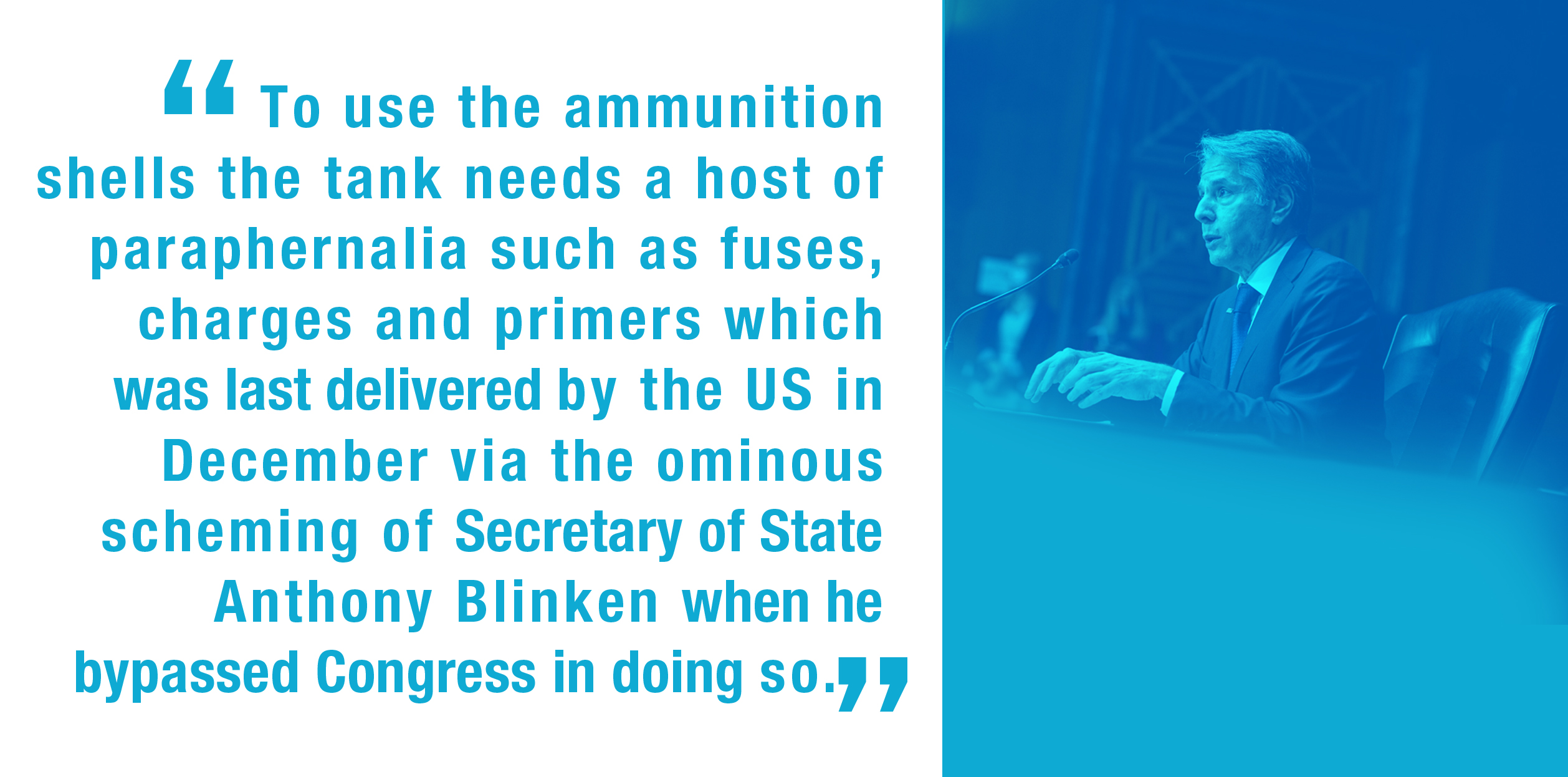
- To use the ammunition shells the tank needs a host of paraphernalia such as fuses, charges and primers which was last delivered by the US in December via the ominous scheming of Secretary of State Anthony Blinken when he bypassed Congress in doing so.
- The provision of these paraphernalia comes under the military aid package legislation that was stuck in Congress and is awaiting the return of the legislators from a brief recess till Feb 28 to be approved.
- Moreover, the supply of their renowned and so-called “invincible” Merkava tanks are heavily depleted because Hamas and Hezbollah are destroying the tanks at an accelerated pace via RPG attacks and precision guided missiles and bombs.
- This is the slow and grinding strategy and tactics of an attrition war on the part of Hamas and Hezbollah that are borrowed from the Russian experience of an attrition war in Ukraine.
- This has forced Israel to substitute its tank shelling of civilians to drone “shelling” of the civilians.
- Israel could also be facing dire shortages of bombs and missiles because their continuous supply from the US is now at a dead end due to the debt-ceiling crisis brought about by the death spiral of the US national debt.
- The US is mired in a debt-ceiling crisis which limits its budget to frequent short term continuing resolution (CR) to prevent a shutdown of the government.
- It’s not that all these weaponries and ammunitions are all out-of-stock in Israel. The Zionist state still has plenty of them.
- It is conserving these weaponries and ammunitions for a final all-out brutal war against Hamas and the Axis of Resistance.
- This is again taken from the same playbook of Russian experience in the Ukraine war in 2022 when it faced the Ukrainian counter-offensive in a situation where the Russians were outnumbered in troops and equipment.
- The Russians made a strategic decision then to withdraw from territories it occupied when it deemed defending them will result in huge loss of troops and equipment.
- So it came out with tactics to retreat in such a way that while retreating, it inflicted the most severe damage to the Ukrainian soldiers and their weaponries, while at the same time keeping the number of Russian troops and their equipment intact.
- And while it is in this position of being outnumbered, Russia also waited patiently for the country to mobilise more troops and cranking up its military industrial complex (MIC) to produce more weapons.
- And this where Israel departed from the Russian strategy because it cannot mobilise its reservist troops in good numbers and crank up its MIC to produce more weapons and ammunition shells.
- Like Ukraine it is very much dependent on Uncle Sam (or the senile Grandpa/Genocide Joe) for its weapons and ammunitions.
- The only option left for Israel is to conserve its existing weapons and ammunitions for a final brutal assault on its enemies.
- This also requires Israel to “conserve” its soldiers from certain death at the hands of Hamas and other resistance groups by withdrawing them from northern and central Gaza.
- As a big chunk of Israeli soldiers are reservists, some of these withdrawn soldiers can then be “demobilised” to return to their civilian jobs to help prop up its near collapsed economy.
- The main reason why Israel is unable to mobilise its reservist troops in good numbers and crank up its MIC to produce more bombs and ammunitions can all be boiled down to “it’s the economy, stupid!”
- The Axis of Resistance has proven to be very adept at waging an economic war against Israel. Then the US unwittingly made itself a participant of this economic, attrition war, followed by the British.
- See it’s always the Anglo-Saxon governments which are fond of abetting wars especially when it comes to Israel and the Middle East.
- The 1948 Nakbah (Catastrophe) came about precisely because of active participation of the Anglo-Saxon governments which die, die wanted political Zionism to prevail.
- In an economic-attrition war, the Axis of Resistance wins by maintaining its offensive capacities and operations for longer than the US and US-backed Israeli forces can defend.
- Like troops, tanks, and artillery pieces, the operational goal is to grind the enemy slowly but surely into retreat, then capitulation.
- This is precisely what is going on in the Gaza war.
- In the early days of the war, Hamas inflicted on Israel a meat-grinding operation against Israeli soldiers in Gaza itself, and an economy-grinding operation by shelling the southern cities of Eilat, Ashdod and Ashkelon with rockets and mortars.
- These are the cities where Israeli ports are situated where all its imports by sea reached Israel. Ashkelon, which is closest in range to Gaza, has been closed since then.
- It really doesn’t matter whether the Hamas shelling caused massive damages or not.
- What mattered is the immediate effect of these shelling caused a tenfold surge in war risk insurance for vessels and cargoes, and the curtailment of international vessel movement in and out of the Israeli ports, choking the Israeli economy.
- Another effect of these shelling is to cause tens of thousands of Israeli illegal settlers in the Gaza Envelope to be displaced within Israel.
- This means the Israeli government will have to fork out a lot of monies to compensate these illegal settlers for the loss of their illegal settlements plus maintaining them as internal refugees – thus draining much needed funds from the government to wage its war for a Greater Israel.
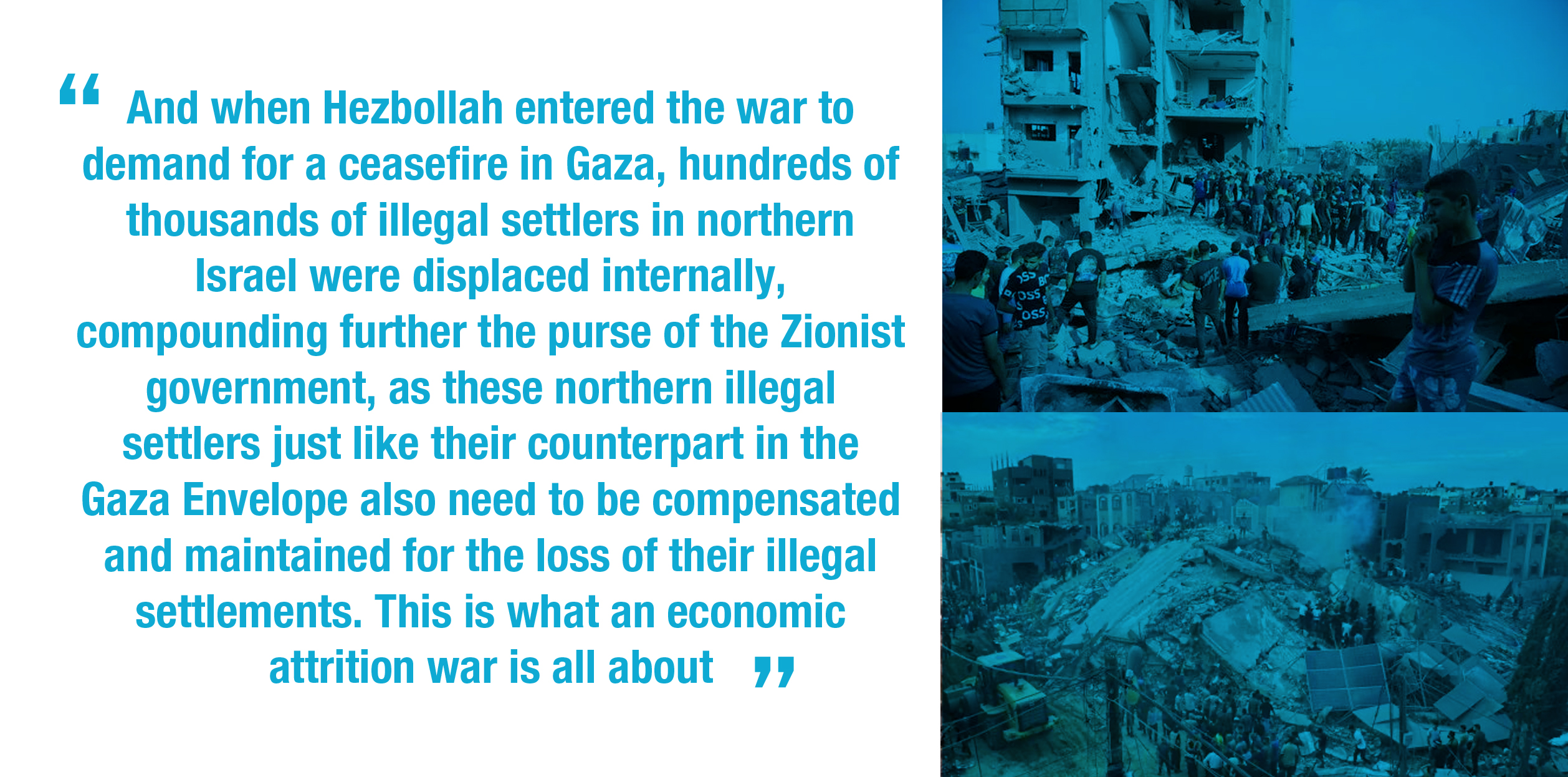
- And when Hezbollah entered the war to demand for a ceasefire in Gaza, hundreds of thousands of illegal settlers in northern Israel were displaced internally, compounding further the purse of the Zionist government.
- This is because these northern illegal settlers just like their counterpart in the Gaza Envelope also need to be compensated and maintained for the loss of their illegal settlements.
- This is what an economic attrition war is all about.
- When the Ansarallah Houthis came into the picture, Israel’s economic woes intensifies further as the Houthi sanctions on shipping are showing more effectiveness in stopping Israel-bound or Israel-linked vessels in the Red Sea than US sanctions have been to block Russian oil shipments.
- At this stage, the US and the UK entered the economic-attrition war by bombing Yemen to save Israel’s economy but this does not deter the Houthis from continuing its war on the high seas to support the Palestinians from being decimated by Israel’s greed for genocide.
- It is no coincidence that a few weeks after the entry of US and UK into this economic-attrition war, two pieces of news came that underscore further the seeming Axis’ impending economic victory against Israel.
- These news are the UK is already in a recession and Moody’s downgrading of Israel’s credit ratings from A1 to A2 and its outlook kept at “negative” due to what the ratings agency believes are the political and fiscal risks stemming from the country’s continuing war with Hamas.
- Veteran journalist, John Helmer summarises it well in the heading of one of his recent articles on his blog which is “Moody’s just told you so – downgrades Israel, warns that weaker US backing for Israel, war with Hezbollah would trigger crash”.
- In essence what Helmer is saying is there are three important implications in the Moody’s downgrade – the first ever in Israel’s history.
- The first is Israel will soon have to request enormous cash backing from the US, and if there is any sign of weakening on that in Washington, the collapse of the Israeli economy is inevitable which will affect its capacity to continue its war.
- The second implication has to do with the announcements from IDF generals and Netanyahu of their plan to expand their operations on the northern front – the so-called Litani River ultimatum.
- In this regard Moody’s said the risk of an escalation involving Hezbollah in the North of Israel remains, which would have a potentially much more negative impact on the economy than currently assumed under Moody’s baseline scenario.
- Government finances would also be under more intense pressure in such a scenario, added Moody’s.
- The third point is the most explosive. After cutting Israel’s rating to A2, Moody’s warned that further and deeper downgrades may follow, but that there is presently no way the ratings agency can predict what will happen next.
- “The ongoing military conflict with Hamas, its aftermath and wider consequences materially raise political risk for Israel as well as weaken its executive and legislative institutions and its fiscal strength, for the foreseeable future,” Moody’s said.
- Helmer then concludes “in flagging those last four words – “for the foreseeable future”, Moody’s has just told the markets that the strategic initiative in this war has now passed to the Axis of Resistance. Of course, the Arabs and Iranians already know”.
- In an earlier post Helmer has also provided a list of some economic/financial indices in the financial markets particularly the international money markets that traders use to assess which party in an on-going war is likely to lose the war economically.

- Traders do this not so much with the altruistic motive of being concerned with the horrific numbers of Palestinian civilians killed, but with the ultimate purpose of finding opportunities to make more monies for themselves.
- These indices will provide these traders an inflection point in the flow of money that will do its damage, not by hitting the Israelis and Americans in their bunkers with bullets and bombs, but by moving the money the US-backed Israeli entity needs out of reach, and cutting them off from market confidence that they can win their war, genocide or not.
- All these indices are showing Israel is in a losing position in this economic-attrition war. Of importance what is Israel’s response to this?
- As with Ukraine in the Ukraine war, it is throwing war tantrums by killing more and more Palestinian civilians as that’s what is left of the capacity/capability of the once mighty Israeli army.
- There are some Muslim analysts who in their attempt to forge unity among the Arab and Muslim countries in the Gaza war have produced figures that show the increasing trend of accelerated rising exports of essential goods such as oil and foodstuff of these countries to Israel since the war began instead of putting a total halt to these exports.
- Among others they have listed Turkiye, UAE, Jordan, and Egypt of being guilty in doing this.
- But what these analysts fail to see is that an economic-attrition war is a slow grinding war against the enemy’s economy.
- Increasing their exports to Israel without increasing their imports of goods from Israel have the effect of making the balance of trade with Israel in favour of these Muslim/Arab countries.
- And since Israel is not getting all these exported goods free of charge and has to pay for them, it means Israeli assets (monies) which are much needed to finance its genocidal war are moving out to these Muslim countries, which will worsen further Israel’s economic woes.
- Some Muslim countries like Turkiye and Algeria are not really rich countries of the same magnitude as the UAE or Saudi Arabia.
- Ditto with Azerbaijan and Kazakhstan which are relatively poorer than Turkey. Turkey imports a substantial amount of oil and gas from these two poorer Muslim countries and then refined their oil and gas to be exported at a higher price to Israel.
- So until and unless we know what is the exact import figures of these Muslim countries coming from Israel, it is quite premature to say that they are the enemy within.
- Meanwhile whether the Gaza war will morph into a regional war involving major powers that in turn will lead to a world war has also become a ticking time bomb too which is also a function of the US national debt spiral.
- Perhaps both Russia and China are studying the economic/financial indices to get an idea of the perfect timing for their involvement in this regional war.
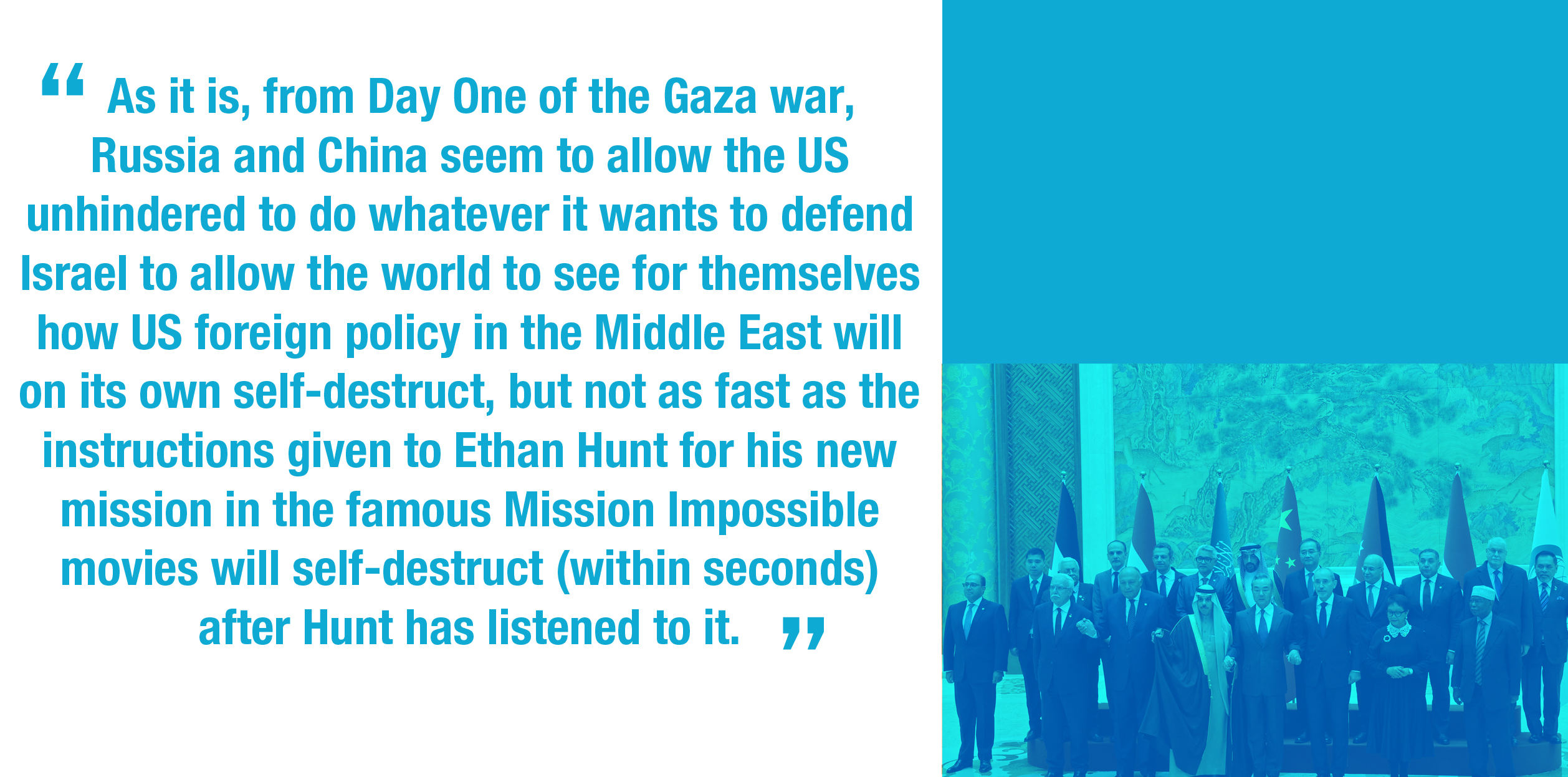
- As it is, from Day One of the Gaza war, both countries seem to allow the US unhindered to do whatever it wants to defend Israel.
- The reason they do this is to allow the world to see for themselves how US foreign policy in the Middle East will on its own self-destruct in the Gaza war, but of course not as fast as the instructions given to Ethan Hunt for his new mission in the famous Mission Impossible movies which will self-destruct (within seconds) after Hunt has listened to it.
- It’s like Russia and China are giving enough ropes to the US for it to hang itself in the Middle East.
- It is in this sense that the occurrence of the much feared regional war engulfing the world is a ticking time bomb that could blow away any time soon, all because in the US, “it’s the national debt, stupid!”.
Read more on the death spiral of the US debt, its debt-ceiling crisis and the economic-attrition war that is unfolding in the Gazar war:
PRESIDENT CLINTON: THE FIRST BUDGET SURPLUS IN A GENERATION
What to Know About the History of the Debt Ceiling
US public debt forecast to hit 116% of GDP
Debt could destroy US economy – JP Morgan boss
US budget deficit tops half a trillion
US government debt biggest threat to global economy – Russian NGO
US government debt reaches new milestone
US planning to send more bombs to Israel – WSJ
House lawmakers abandon Ukraine and Israel aid package vote as they head off on recess
Saudi, Chinese vessels undeterred by Yemen Red Sea ops
Is an all-out war in the Middle East inevitable?
The many ruts US got itself stuck in; sanctions, air power included
U.S. Foreign Policy Seems to Have Nowhere to Go
Lawmakers warn that Biden must seek authorization before further strikes on Yemen’s Houthi rebels
Pentagon contradicts White House about US troop presence in Yemen
China halts shipments to Israel, hurting its own port
Spain’s lies about ending arms to ‘Israel’ exposed; data speak volumes
Israel Has Bought a Mass Online Influence System to Counter Antisemitism, Hamas Atrocity Denial
Paradigm Shift: The failure of the American Empire’s Propaganda Machine
Yeh Man, the U.S. Has an Addiction to War and Empire
The anatomy of Zionist genocide
The psychology of the Israeli genocide in Gaza
Israel, Just Downgraded, Readies Bond Spree to Pay for War Against Hamas
‘Israel’ may have to sell record-amount of bonds to fund Gaza genocide
Israeli quadcopter drones terrorize Gaza civilians
Israel blasts Moody’s downgrade
Israeli media: S&P and Fitch to downgrade ‘Israel’ in Moody’s steps
Red Sea ‘No Longer a Resort for Americans to Roam and Have Fun In’ – Houthi Official
War with Hezbollah to be ‘Israel’s’ deadliest: 130-page Israeli report
Did Israel really win the war?
Deadly politicking is main cause of the latest Middle East conflagration
The killing fields of Gaza. Genocide as spectator sport
Too Scared – Israel’s Givati Brigade Troops Refuse to Rejoin Gaza War
UK tips into recession in blow to Rishi Sunak
Nearly half of voters think it’s likely Biden will be replaced as nominee, a new poll shows
US Banks Saw $65BN Deposit Flight Last Week, Loan Volumes Shrank
Blood Money: The Top Ten Politicians Taking the Most Israel Lobby Cash
US Navy Worried Over ‘Scary Scenario’ of Houthis Armed With High-Speed Unmanned Naval Drones
ATTRITION WAR — HOW ISRAEL IS LOSING ON THE ECONOMIC FRONT
Netanyahu to be ousted – media
The enemy within: Arab states that trade with Israel
Russia invites Palestinian factions to meet on Feb 26 – Palestinian Authority PM
Regards,
Jamari Mohtar
Editor, Let’s Talk!
P.S: Read our op-eds published by several news portals about the regional war in the Middle East, the end of the US Empire, the latest in the Ukraine war, the on-going Hamas-Israel war, unprecedented Hamas attack on Israel, Nagorno-Karabakh, Brics-11, the sanctions war imposed on Russia, the Black Sea Grain Initiative and China & Russia as peacemakers in the Middle East:
Regional war in the Middle East
2024 – Tectonic geopolitical change that will upend US empire
The year America failed to predict the unexpected
In 2023, the US fails to expect the unexpected
An ‘unexpected’ hardening of Russia’s stance
Hamas-Israel war spotlights Palestine sovereignty
Don’t underestimate the Muslim-Arab group working for a ceasefire via diplomacy
US, Israel may be on verge of defeat in war of attrition
The Plan For Israel To Supply Natural Gas To Europe
Israel’s plan to supply gas to Europe
The plan for Israel to supply natural gas to Europe
Possible reason why Israel attacks Gaza
The anatomy of a war of attrition
The world on the brink of a major war?
Diplomacy as a response to Israel-Gaza war
Regional superpower caught with pants down by ‘ragtag’ fighters
The crude sophistication of Hamas’ tactics
Blaming Russian ‘ineffective’ peacekeeping to start a war
Nagorno-Karabakh: War games on a chessboard turned real?
Implications of an expanded BRICS
Black Sea grain deal – another blow to the global economy?
Black Sea Grain Initiative hits a snag
The Global Whammy Of Rising Food Inflation
SURAT | Hebatnya pukulan kenaikan inflasi makanan sedunia
Russia has already won the sanctions war
China and Russia: Peacemakers in the Middle East with a difference


Recent posts
- Vol 3 No 45: The US and Israel may just be defeated in a war of attrition [PDF]
- Vol 3 No 46: Various endgame scenarios for the Hamas-Israel war [PDF]
- Vol 3 No 47: 2023 In Review (Part 1): The failure to expect the unexpected [PDF]
- Vol 3 No 48: 2023 in Review (Part 2): The year global public opinion shifted in favour of the Palestinians [PDF]
- Vol 4 No 49:2024 – Tectonic geopolitical change that will upend US Empire [PDF]
- Vol 4 No 50: Will Iran directly enter the regional war in the Middle East that has started on Dec 31? [PDF]